
Uncertainty Over Insurance of Government Property; Minister Ghising Says Structural Insurance May Not Be Economically Viable
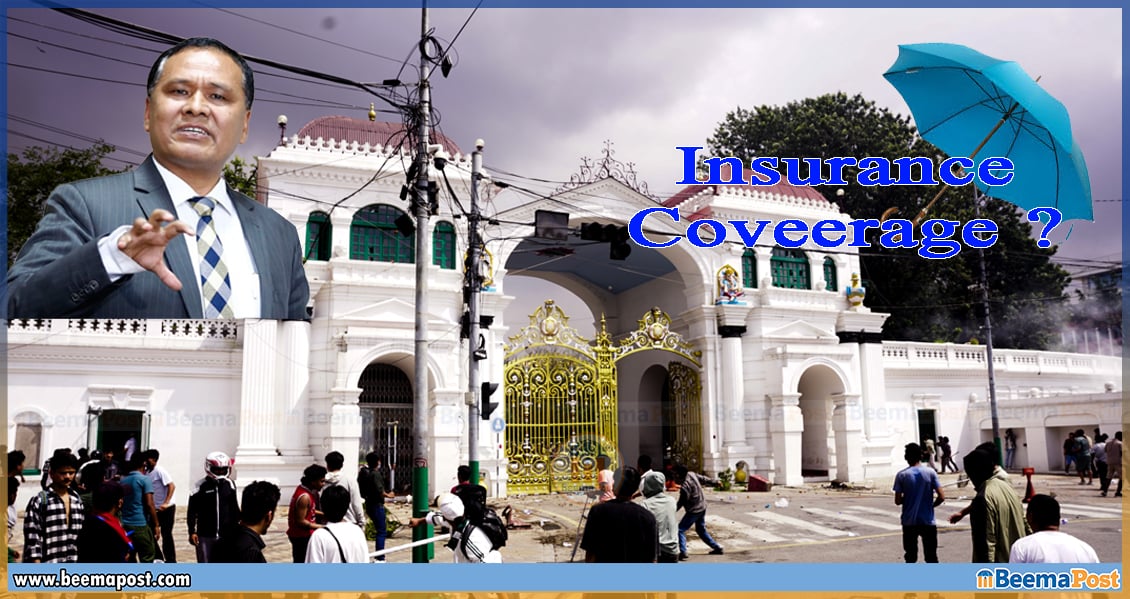
Kathmandu – Despite growing discussion on the need to insure government property following recent protests, the government remains undecided on whether physical structures should be insured.
The government initiated the first phase of insurance coverage last month by insuring 20 vehicles under the Ministry of Finance. However, no formal decision has been made regarding the insurance of government buildings and physical infrastructure.
Minister for Physical Infrastructure and Transport, Kulman Ghising, has stated that insuring government structures may not be economically viable. Speaking on Nafij’s Arthachitra program, Ghising said that paying insurance premiums annually for a large number of government buildings could place a heavy financial burden on the state.
According to him, the government owns a significant number of buildings and physical assets, and insuring all of them would require substantial premium payments every year. In comparison, he said, it may be more cost-effective to carry out repairs and reconstruction using government funds when damage occurs.
Recent protests have caused considerable damage to several government buildings. As these structures were not insured, the government is now required to bear the reconstruction costs. While this has highlighted the importance of insurance, Ghising emphasized that the economic feasibility of insuring all government structures needs careful evaluation.
He cited the example of the Nepal Electricity Authority, which does not insure its transmission and distribution lines due to higher insurance premiums compared to potential damage costs. Instead, the authority carries out direct maintenance and reconstruction when needed. However, he noted that hydropower projects are insured.
Minister Ghising clarified that no final decision has been taken on the matter. He said the government will conduct detailed analysis based on the nature of infrastructure and structures and make decisions accordingly, taking into account financial sustainability and practical considerations.