
Second Fewa Dialogue Concludes in Chengdu, Focuses on Climate, Governance, and Sustainable Development in South Asia
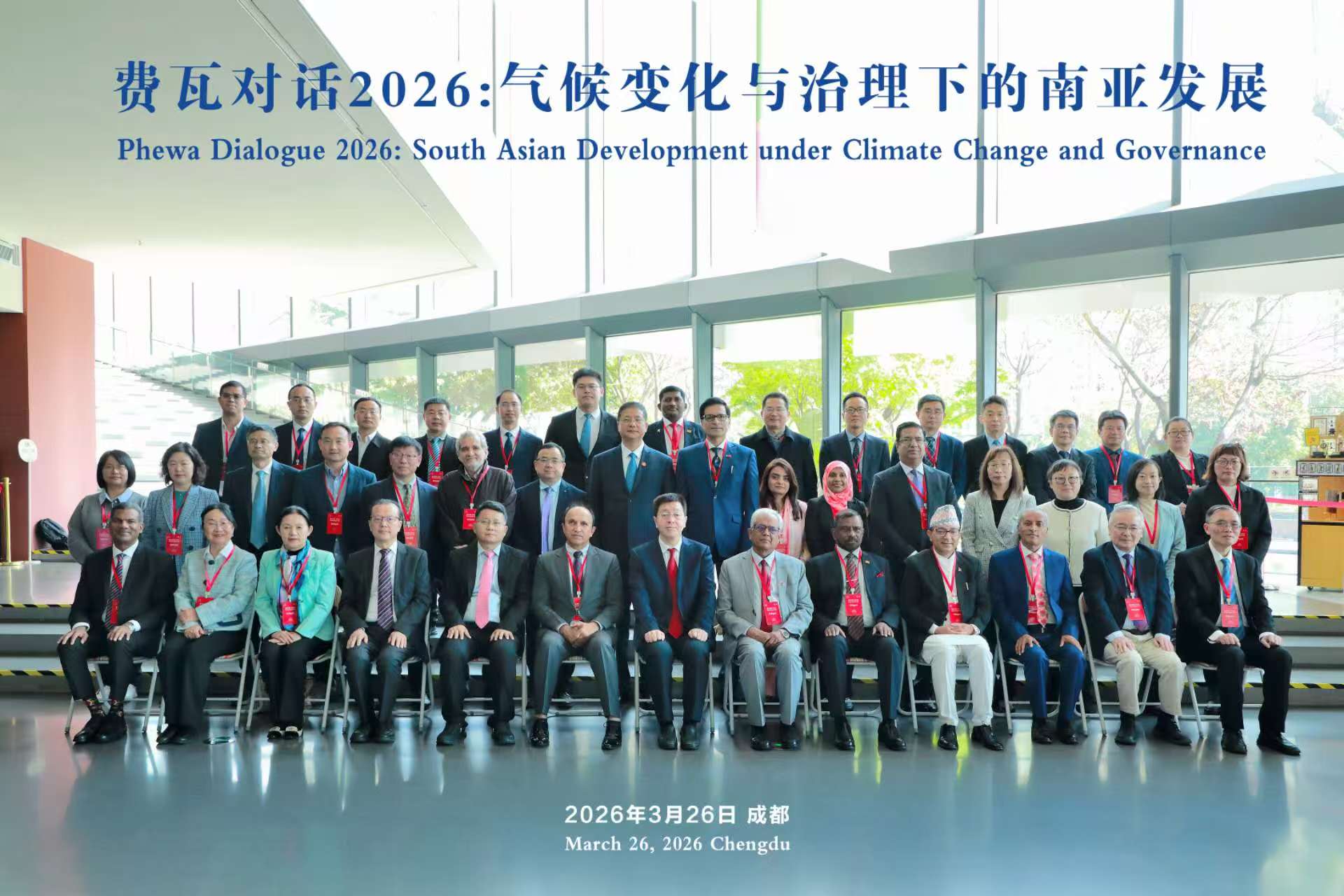
Kathmandu — The second edition of the Fewa Dialogue concluded successfully on Friday in Chengdu, China, marking another step forward in strengthening academic exchange and regional cooperation between China and South Asia.
Held from March 26 to 27, the two-day event was jointly organized by Sichuan University’s China Center for South Asia Studies (CCSAS) and Nepal’s Tribhuvan University. It brought together leading scholars, think tank experts, and policy practitioners from across China, South Asia, and neighboring regions.
The Fewa Dialogue serves as a key academic platform for in-depth discussions on major strategic issues shaping regional development. It aims to foster mutual understanding, build consensus, and deepen collaboration among participating countries and institutions.
This year’s conference in Chengdu centered on the theme “Climate Change, Governance, and Development in South Asia.” Set against the growing urgency of global climate challenges, participants emphasized the critical role these issues play in the region’s sustainable development. Discussions took an interdisciplinary and cross-sectoral approach, focusing on governance strategies for both climate adaptation and mitigation.
Through high-level sessions, panel discussions, and expert exchanges, the dialogue underscored the need for stronger cooperation and more innovative solutions to effectively address climate-related risks while unlocking new development opportunities. Conversations also explored ways to boost regional economic cooperation, promote green growth through clean energy and emerging industrial value chains, and support a broader shift toward sustainable lifestyles.
Zhang Maoming, China’s Ambassador to Nepal, highlighted the importance of collective action in tackling climate change. He noted that China and Nepal have made meaningful progress in working together on climate issues. He added that China’s accelerating green transition is opening up new opportunities for sustainable development across Nepal and the wider South Asian region.
Liu Chao, Vice President of Sichuan University, pointed to the strong and enduring partnership between his institution and Tribhuvan University. He said that under the Belt and Road Initiative, the university has run 11 short-term international exchange programs. More than 400 South Asian students, including over 100 from Nepal, have studied there. He also emphasized the university’s academic strengths in areas such as climate change, disaster management and reconstruction, carbon neutrality, and green energy.
Professor Khadga KC, Rector of Tribhuvan University, said the ideas shared at the conference would help strengthen inter-regional connectivity, bridge existing gaps, and deepen Track II-level engagement between China and South Asian countries.
The first Fewa Dialogue was held in Pokhara, Nepal, in December 2024. Organizers expect the forum to continue growing as an important platform for dialogue and collaboration, contributing to stronger regional partnerships and innovative responses to global challenges in the years ahead.