
Nepal Has Until 2047 to Turn Its Young Workforce Into Lasting Growth, World Bank Says
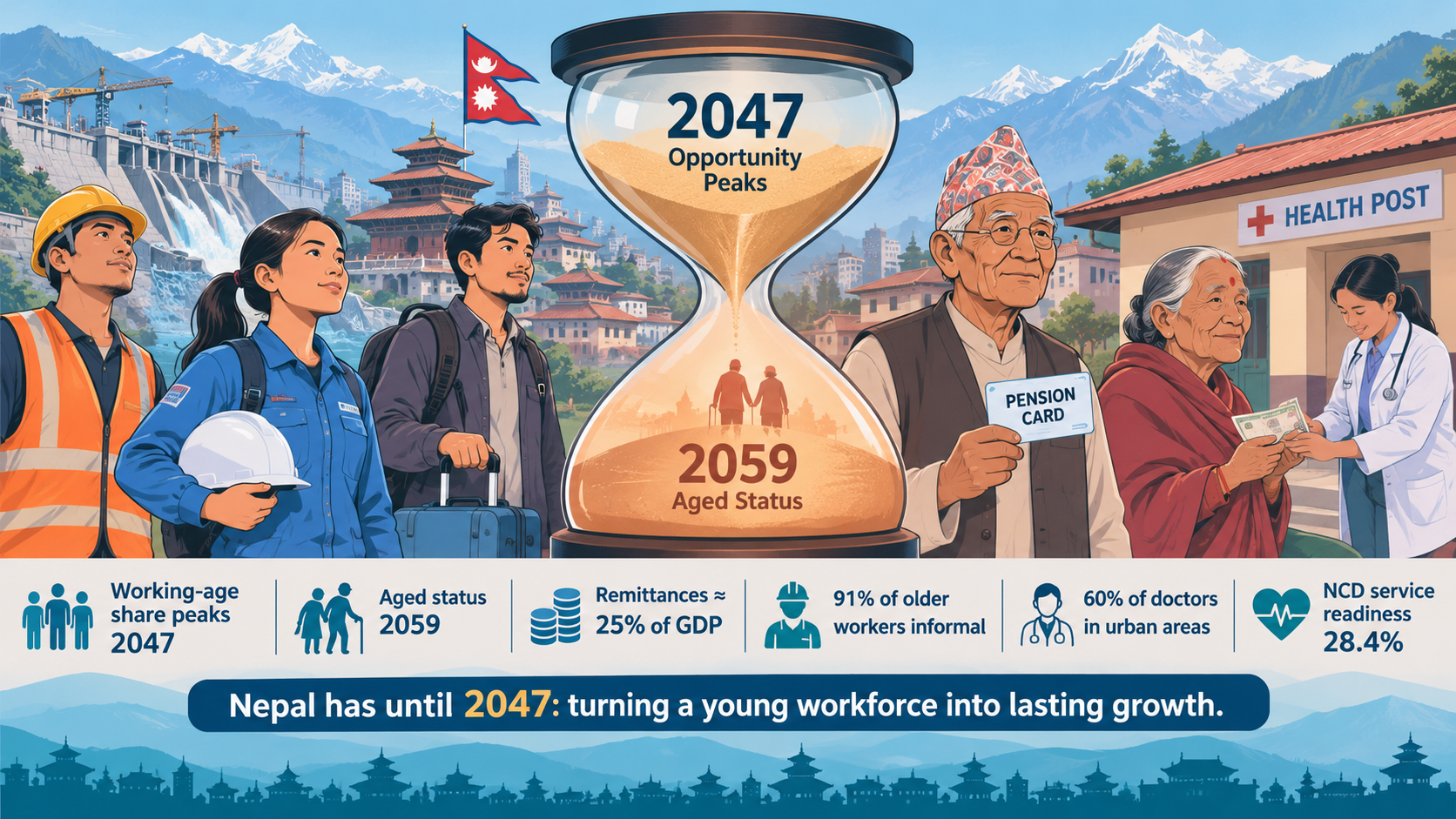
Kathmandu — Nepal has more time than most South Asian countries to benefit from its large working-age population, but weak jobs, health coverage and pension protection could waste the chance, according to a World Bank report released on 3 November 2026.
The report, Demographic Change in South Asia: From Tailwinds to Headwinds for Development, says the region’s 1.17 billion working-age people will peak in less than a decade. By 2049, South Asia will be an aged economy, with 14% of its people aged 65 or older. The shift from ageing to aged status will take 25 years, against 32 for the average developing economy.
Nepal’s working-age share is projected to peak in 2047, with aged status expected in 2059. But remittances equal about 25% of GDP, and returning migrants earn less than non-migrants for roughly three years, suggesting migration has not yet raised productivity at home.
Health and social gaps are wide. About 60% of doctors live in urban areas, while most Nepalis live in rural areas. Health facilities’ readiness for non-communicable diseases stands at 28.4%. Women work about nine hours a week less than men because of care responsibilities.
Older workers are largely unprotected. About 91% of employed Nepalis aged 65 and above work informally, so most have no contributory pension. The report points to the Social Security Fund, set up in 2018, which offers a 9% government match for informal workers, and to the Senior Citizen’s Allowance of NPR 4,000 a month. It recommends expanding the allowance and combining vocational training with job placement for returning migrants.
World Bank Vice President for South Asia Johannes Zutt said the region’s economies are ageing earlier and at lower income levels, so they must act now on jobs while preparing for old age.
For Nepal, the extra time is useful only if it is used. More productive jobs, wider pension coverage and stronger health services will decide whether a young workforce becomes lasting economic gains.