
UN Tax Protocol Draft Proposes Binding Arbitration for Unresolved Disputes After Three Years
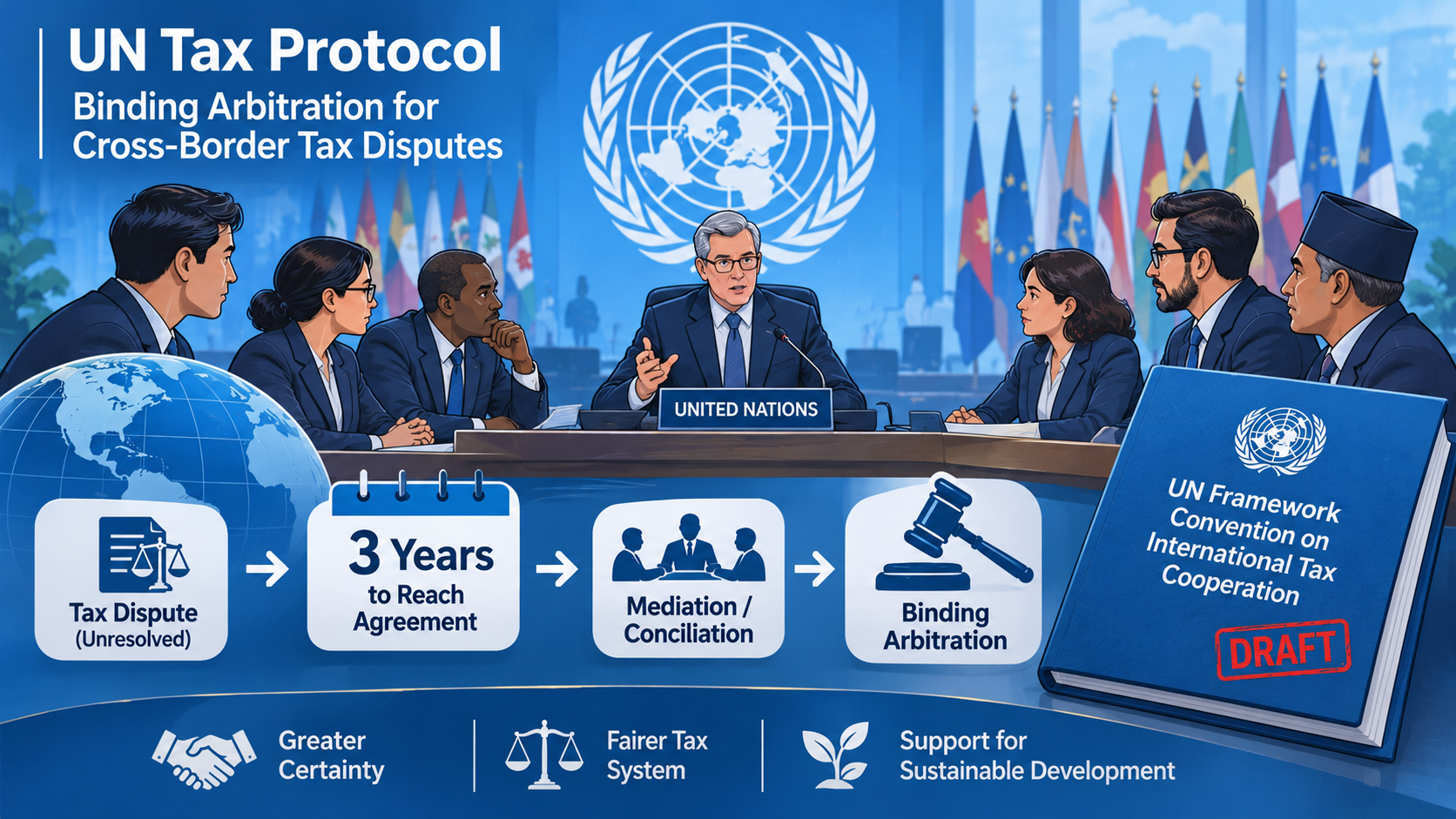
New York — A new draft protocol circulated on 16 November 2026 proposes binding arbitration for cross-border tax disputes that governments fail to settle within three years. The text, prepared by the co-leads and issued as document A/AC.298/CRP.39, would sit under the proposed UN Framework Convention on International Tax Cooperation. It remains a working draft with many provisions in brackets.
The protocol has two parts. The first aims to prevent disputes. Taxpayers could ask tax authorities for advance pricing arrangements and advance rulings on how a tax treaty applies, so that treatment is agreed before disputes arise. Tax authorities could also run simultaneous or joint audits and set up cooperative compliance arrangements. Authorities would aim to finish the advance arrangements within 24 months, and each authority could decline a request.
The second part covers resolution. A taxpayer who believes taxation breaches an applicable tax instrument, such as a bilateral tax treaty, could present the case to a tax authority within three years of first notification. Authorities would aim to resolve it by mutual agreement within 30 months. They could also use mediation or conciliation, in which independent third persons help the authorities, and conciliators may make non-binding proposals.
If authorities cannot agree within three years, any one of them could send the unresolved issues to arbitration. A panel of three arbitrators drawn from a roster kept by the United Nations would decide, and the decision would bind the participating states for that case only. Its effect on the taxpayer is limited: the case would be settled through the mutual agreement procedure, and the taxpayer could reject the resulting agreement. Countries could also opt out of the arbitration and mediation articles, or of the consultation chapter, by reservation.
Several key issues are still open. These include limits on using investment agreements and other non-tax treaties to challenge tax matters, and whether the protocol would override existing treaty mechanisms or leave them in place. The rules on the Meeting of the Parties, the secretariat, funding and the number of ratifications needed for entry into force are marked “to come”. The draft says fees must be predictable and proportionate, with equitable access for countries with limited resources.
The draft is an attempt to balance certainty for taxpayers with the sovereignty of tax authorities, and the outcome depends on how negotiators settle the bracketed text.