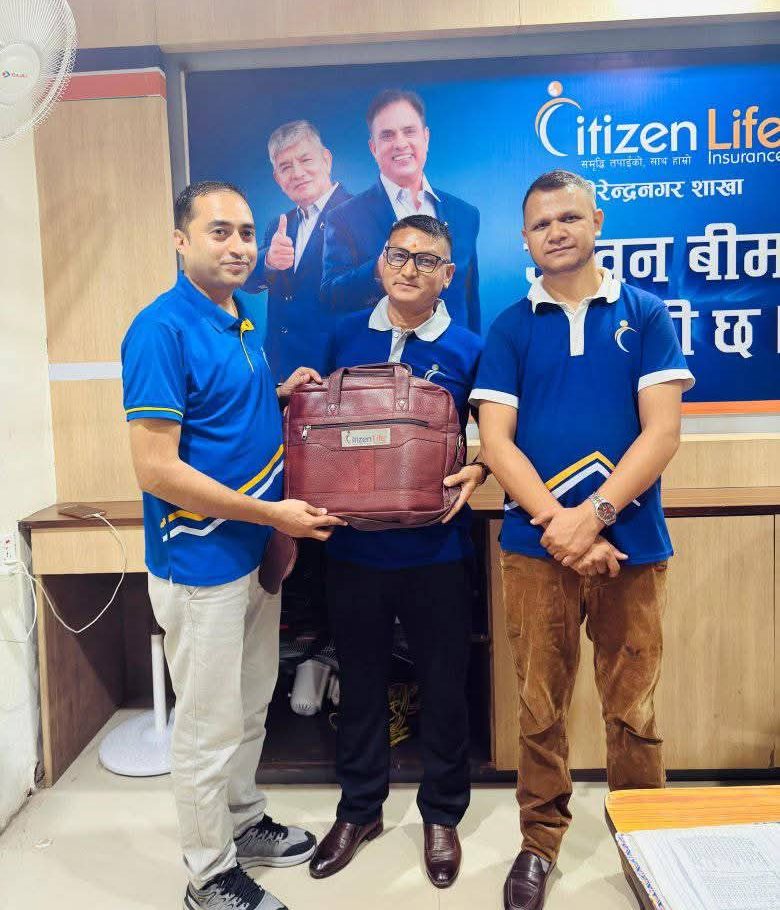
After Two Decades in Government Service, Raju Sijapati Finds a New Calling in Insurance
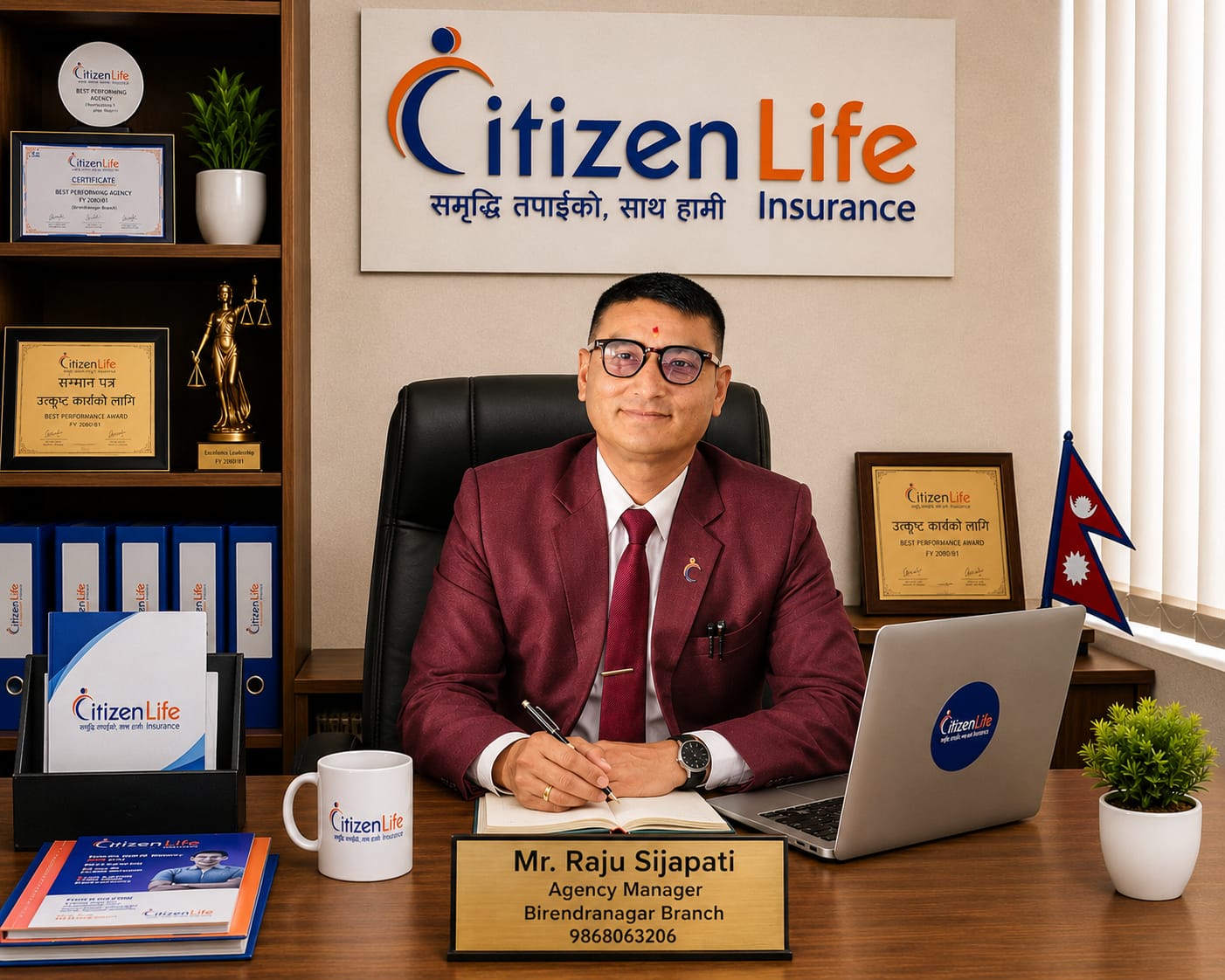
Kathmandu — Retirement often marks the beginning of a quieter life for former government employees in Nepal. Most choose to rely on pensions and step away from professional responsibilities altogether. But Raju Sijapati has taken a different path. After serving more than 20 years in government service, Sijapati has reinvented himself as an insurance agent, building a second career centered on financial awareness and public service.
Born on October 20, 1979 in Seri, now part of Gurans Rural Municipality in Dailekh district, Sijapati completed his higher secondary education and currently lives in Birendranagar, Surkhet. From there, he spends much of his time visiting households and encouraging people to secure their future through insurance.
Though originally from Dailekh, he has built his home in Birendranagar-9, where he lives with his family of six. His wife works in tailoring and knitting, while their children are pursuing their studies. He also continues to support and care for his parents, who still reside in Dailekh.
According to Sijapati, his wife’s income is enough to manage day-to-day household expenses, but larger financial responsibilities such as children’s education and festival costs require additional income. Earnings from his insurance profession have therefore become the main source of financial stability and savings for the family.
Before entering the insurance business full time, Sijapati served in the Armed Police Force Nepal, where he spent more than two decades working around the clock to protect people and property. Despite the demanding nature of security service, he never completely distanced himself from the insurance sector.

While still employed, he obtained an agent license from Nepal Life Insurance and worked part time in insurance. However, the fixed schedule and pressure of government service prevented him from continuing actively, and his license eventually lapsed after years without renewal.
After retiring at around the age of 44, he decided to return to the insurance field with full commitment. He joined Citizen Life Insurance and restarted his journey as a professional insurance agent. Sijapati says he was first introduced to insurance by a relative who worked as a teacher and encouraged him to buy a policy. Over time, his curiosity about the profession grew stronger.
What attracted him most, he says, was the combination of income, recognition, social respect, and the opportunity to help people protect themselves financially. “Insurance is not just business,” he says. “It is also social service because it helps people build savings and provides protection during difficult times.”
Since becoming a full-time agent in fiscal year 2024/25, Sijapati has already earned recognition as a Silver Club achiever and now hopes to qualify for the Diamond Club. So far, he has helped 34 people purchase insurance policies through Citizen Life Insurance. He says none of his clients have yet filed claims related to death, accidents, or critical illness, and all of them continue to pay their premiums regularly without surrendering their policies. He personally reminds policyholders about upcoming payments and even visits their homes if necessary to ensure premiums are paid on time.
His method of approaching clients is deeply personal. Rather than beginning with policy details, he first tries to understand a family’s health condition, income level, savings habits, social background, and financial responsibilities. Only after building trust through conversation does he introduce the subject of insurance.
According to him, many Nepalis still carry negative perceptions about insurance, often because of past experiences involving dishonest agents who collected premiums but failed to deposit the money with insurance companies. He says some people also compare insurance companies with failed cooperatives where depositors lost their savings, making it harder to build public confidence in the sector.
Sijapati believes one of the biggest responsibilities of an agent is to change those perceptions through transparency and trust. He often encounters households where a single earning member supports five or more dependents. In such situations, he believes insurance becomes even more essential.
“If the sole breadwinner of a family faces an unexpected tragedy, the entire household can fall into financial crisis,” he says. “People should think beyond themselves and insure their lives for the security of their families.” The profession has also provided him with a steady income. He says he usually earns between Rs 40,000 and Rs 50,000 per month, while his highest monthly earnings have reached around Rs 70,000 to Rs 80,000. To him, insurance agency work is a smart profession that offers both financial rewards and social respect. He says even friends working in other trades often acknowledge the dignity and professional image associated with the field.
Still, he admits the profession comes with challenges. He recalls meeting two women serving in the Nepal Army who had abandoned insurance policies with annual premiums of Rs 54,000 because they could no longer afford the payments. According to him, agents sometimes focus too heavily on selling larger policies without properly assessing a client’s long-term financial capacity.
He believes insurance companies should introduce more flexible support systems for struggling policyholders and argues that the Nepal Insurance Authority should ensure customers do not lose significant savings if they are unable to continue paying premiums. “People buy insurance both for savings and risk protection,” he says. “Their money should not go to waste under any circumstances.” Although he currently works mainly in urban areas, Sijapati now hopes to expand his efforts into rural communities.
“Insurance should not only be for wealthy people in cities,” he says. “Even farmers surviving through agriculture and livestock farming in villages deserve insurance coverage, even if the insured amount is small.” Whether while traveling, sitting in tea shops, or chatting casually with strangers, Sijapati constantly brings conversations back to insurance and financial security.
He believes Nepal still has a long way to go in building insurance awareness and urges people to insure themselves as early as possible. “If possible, every family member should be insured,” he says. “And if that is not possible, at least the primary earning member of the household should be protected.” He also argues that Nepal should adopt the culture seen in many developed countries, where people prioritize insurance protection before investing in land or property.