
SEBON Unveils Roadmap to Modernize Nepal’s Capital Market
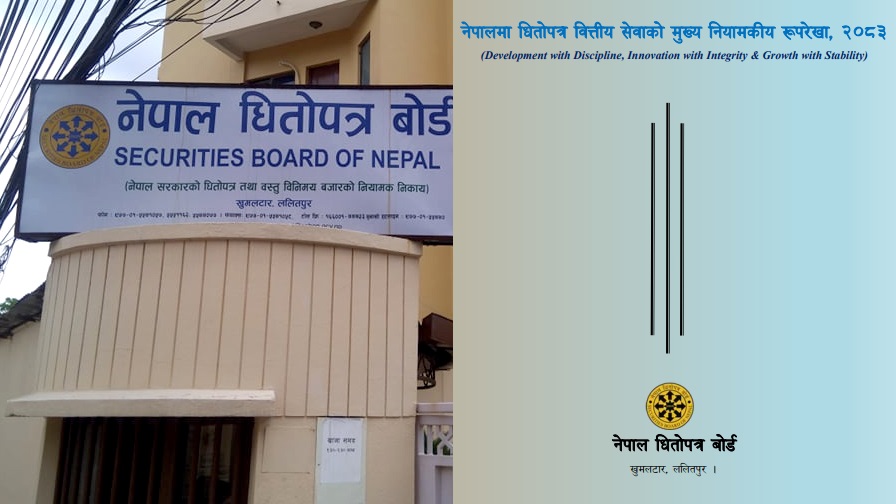
Kathmandu — The Nepal Securities Board (SEBON) has unveiled the Main Regulatory Framework for Securities Financing Services, 2026, outlining a comprehensive plan to modernize Nepal’s capital market and align it with international standards.
The 54-page framework aims to transform a market that has long been dominated by cash-based trading into one supported by securities lending, securities borrowing, covered short selling, and, eventually, derivatives trading. According to the board, these reforms are intended to deepen market liquidity, encourage greater institutional participation, and improve overall market efficiency.
SEBON noted that Nepal’s capital market has made significant progress over the past three decades through the introduction of electronic trading systems, improved market infrastructure, and wider investor access. Despite these advances, trading remains largely cash-based, limiting liquidity, price discovery, risk management, and the participation of institutional investors. The new framework seeks to address these structural shortcomings through an integrated regulatory approach.
The roadmap sets out plans to establish a secure securities financing system, create the legal and operational framework for securities lending and borrowing, introduce covered short selling in phases, strengthen market infrastructure, and enhance investor protection. To support implementation, SEBON will prepare detailed regulations, directives, operational manuals, implementation guidelines, reporting mechanisms, and standardized agreements.
The board identified several key weaknesses in Nepal’s existing market structure. These include excessive reliance on cash transactions, a limited range of financial instruments, the dominance of retail investors, relatively low institutional participation, the absence of real-time risk monitoring, and inadequate advanced risk management systems. It concluded that introducing securities financing, securities lending and borrowing, and covered short selling has become essential to building a more competitive market.
SEBON expects the new framework to improve market liquidity, strengthen price discovery, ensure greater trading continuity, expand risk management tools, and encourage stronger participation from institutional investors. It also believes the reforms will enhance investor confidence, improve market credibility, and contribute to Nepal’s long-term financial stability.
Before finalizing the framework, the board conducted a detailed assessment of its potential economic, financial, legal, institutional, and social impacts. The study concluded that a phased introduction of securities financing services would be more effective than either maintaining the status quo or introducing securities financing alone.
Under the proposed implementation schedule, securities financing services will be introduced first, followed by securities lending and borrowing in the second phase. Covered short selling will be implemented in the third phase, laying the foundation for more sophisticated capital market products in the future.