
Women’s Participation in Life Insurance Stands at 57%, but Only 13% Hold Leadership Positions: Report
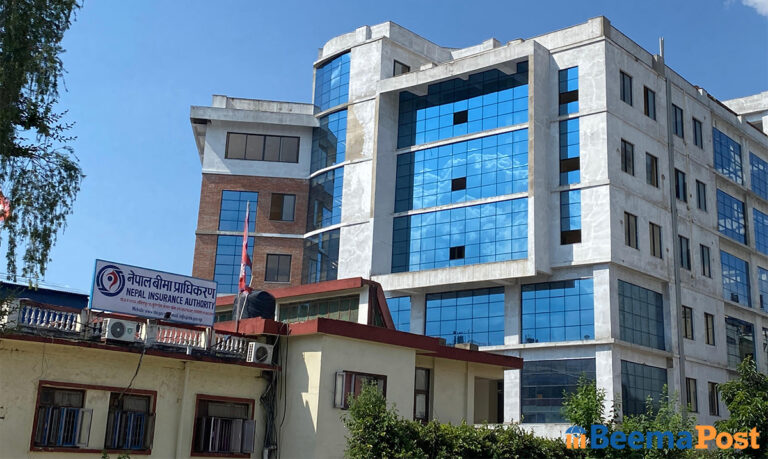
Kathmandu – Although women account for a larger share of life insurance participation than men in Nepal, their representation in the leadership of insurance companies remains significantly low, according to a study. A gender assessment report published by the Nepal Insurance Authority shows that while women lead in the use of insurance services, men continue to dominate boards of directors, senior management and decision-making positions.
The report, titled Insurance Through a Gender Lens: A FEMA-Meter Assessment in Nepal, examines the participation of women and men in the insurance sector, access to insurance services, workforce representation and institutional policies. The study, conducted using the FEMA-Meter framework developed by the Access to Insurance Initiative, covered all 35 licensed insurance companies in Nepal. It also assessed the availability, quality and use of gender-disaggregated data in the insurance sector.
According to the report, women account for 57 percent of total life insurance policyholders, compared to 43 percent for men. Similarly, women represent 58 percent of insured individuals, while men account for 42 percent. However, a significant gap exists in the average premium paid by male and female policyholders. Men pay an average premium of Rs 42,592, while women pay Rs 21,054. The overall average premium stands at Rs 30,258.
The report also identifies differences in claim rates between men and women. Male policyholders have a 3.8 percent likelihood of filing claims, compared to 1.8 percent among female policyholders, meaning men’s claim rate is nearly twice that of women.
Women’s participation is even higher in micro life insurance. They account for 62 percent of both policyholders and insured individuals, while men represent 38 percent. Women pay an average premium of Rs 489, compared to Rs 398 paid by men. The average claim payout is approximately Rs 130,000 for women and Rs 96,000 for men.
Gender-disaggregated data in non-life and micro non-life insurance remains incomplete. Customer records for accident and health insurance show that 40 percent are women, 34 percent are men, while the gender of 27 percent remains unidentified.
However, among total insured individuals, men account for 53 percent and women for 38 percent. In micro non-life insurance covering small businesses, men represent 59 percent of policyholders and women 16 percent, while the gender of the remaining 25 percent has not been disclosed. The report also highlights insufficient gender-disaggregated data on premium collection, claims, agricultural insurance and insurance covering climate-related risks.
Women’s representation in employment and leadership positions within insurance companies also remains unequal. In life insurance companies, men occupy 78 percent of board positions, while women hold only 22 percent. The gender gap is even wider in senior executive management, where men account for 87 percent of positions and women just 13 percent. At the managerial level, women represent 26 percent and men 74 percent.
Similarly, women account for 40 percent of total salaried employees in the insurance sector, compared to 60 percent for men. In non-life insurance companies, women hold 19 percent of board positions, while men occupy 81 percent. Women’s representation in senior executive positions stands at 22 percent. The report also finds that institutional policies aimed at increasing women’s participation have not been implemented uniformly across insurance companies.
Although all 14 life insurance companies included in the study have equal employment opportunity policies, only 64.3 percent incorporate gender diversity into their recruitment processes. Only 14.3 percent review gender representation during promotion decisions.
Policies against sexual harassment are in place in 35.7 percent of companies, while 42.9 percent have anti-discrimination policies. The study further reveals that no insurance company conducts gender-based pay reviews and that salary disparities exist at the senior management level.
According to the report, women’s promotion rate at the senior executive level is zero. However, at the middle-management level, women’s promotion rate stands at 22.2 percent, compared to 13.6 percent for men. The rate of employee turnover among women at board and senior executive levels is higher than that of men. However, at middle-management and general employee levels, men are more likely to leave their organizations.
To improve gender equality in the insurance sector, the report recommends introducing a standardized system for gender-disaggregated data collection and reporting across all insurance companies. It also calls for reducing unidentified gender records, implementing women’s leadership development programs, adopting inclusive recruitment and promotion practices, and designing insurance products that address women’s needs and financial circumstances.
The report further recommends effectively implementing diversity, equity and inclusion policies within insurance companies, publishing annual reports, and ensuring equal opportunities in remuneration, training and career development. It also suggests incorporating gender indicators into the Nepal Insurance Authority’s regulatory and supervisory framework and conducting further research to identify the underlying causes of gender inequality in the insurance sector.