
Global Ecosystem Restoration Hits Record Scale, but UN Says Pace Must Quicken
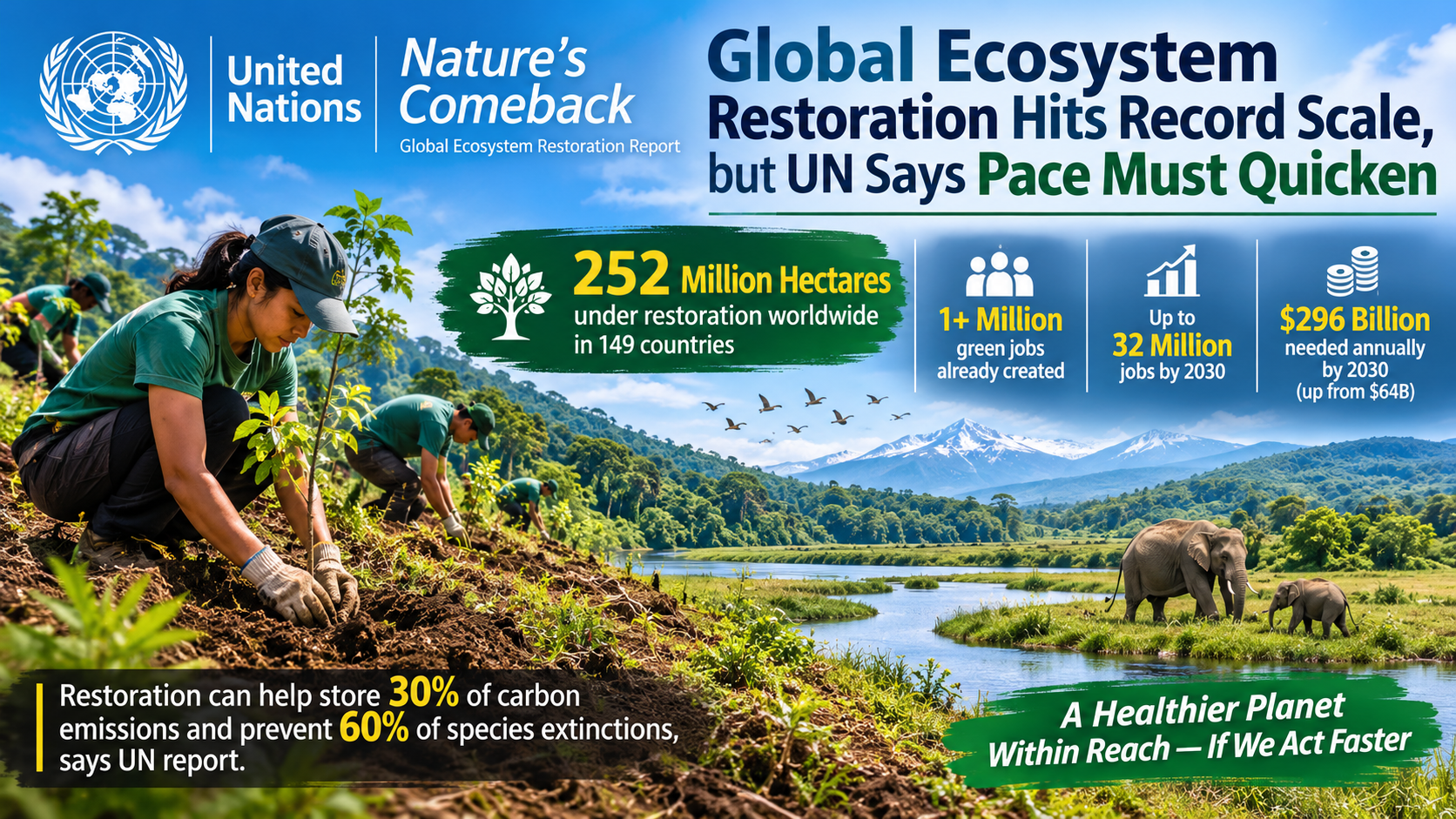
Yerevan– A record 252 million hectares across 149 countries are now under restoration, according to a UN report released Thursday, but the world is still moving too slowly to meet its 2030 targets.
The report, Nature’s Comeback, was produced by the UN Food and Agriculture Organization, the UN Environment Programme (UNEP) and the Convention on Biological Diversity Secretariat, and launched at the UN Biodiversity Conference (COP17). It is the first comprehensive global assessment of progress toward restoring roughly one billion hectares and meeting the Kunming-Montreal goal of placing 30 percent of degraded ecosystems under restoration by 2030.
Progress is uneven. Terrestrial restoration has reached nearly half its target, led by China with 127.4 million hectares. Freshwater and marine ecosystems, which are degrading fastest, lag far behind, with just 11 million and 5.7 million hectares documented, respectively, though limited reporting may mean the true figures are higher. Asia accounts for 192.2 million hectares of the global total, followed by Africa with 36.3 million.
Annual restoration funding must rise from $64 billion to $296 billion by 2030, the report says. The effort has already created more than one million green jobs and could generate up to 32 million by decade’s end.
“We are witnessing the makings of one of the largest movements for nature in recorded history,” said UNEP Executive Director Inger Andersen, adding that restoration is still not happening at the needed scale or speed.
At the launch, five initiatives in China, Colombia, Ethiopia, Italy and the United States were named UN World Restoration Flagships. The report urges a shift from individual projects toward “restoration economies” that sustain ecological recovery and livelihoods.