
India Pledges $1.6 Billion to Nepal as Prime Minister Balendra Shah Seeks to Strengthen Bilateral Ties
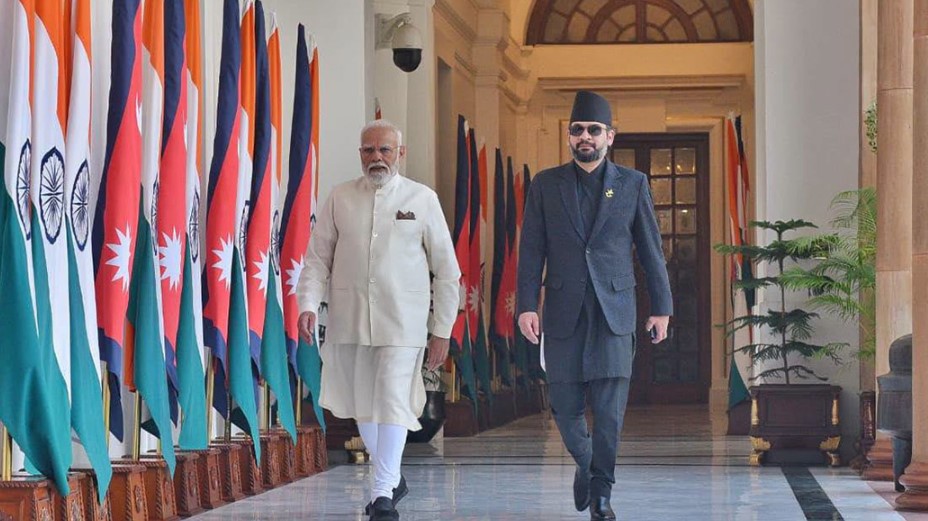
Delhi — India has announced an economic assistance package worth $1.62 billion for Nepal following talks between Prime Minister Balendra Shah and his Indian counterpart Narendra Modi in New Delhi, marking a major outcome of Shah’s first official visit to India since taking office. The two-day visit on November 22–23 resulted in agreements covering development financing, energy, infrastructure, trade, transportation and institutional cooperation, as both countries seek to strengthen their longstanding bilateral relationship.
The assistance package comprises a $377 million grant for post-disaster reconstruction and new infrastructure projects and a $1.24 billion concessional line of credit for energy-sector development. Specific projects and financing arrangements will be finalized through consultations between the two governments. Connectivity was a major focus of the discussions.
India agreed to make the Kathmandu–Bhairahawa–Lucknow air route bidirectional, a move expected to improve international access to Gautam Buddha International Airport. Nepal also secured an additional transit route through Deendayal Port in Gujarat, while access to Paradip Port in Odisha will be made available after the necessary infrastructure is developed.
The two prime ministers also inaugurated a special railway service connecting Ayodhya in India with Janakpur in Nepal. Meanwhile, the completion of the field location survey for the proposed Raxaul–Kathmandu electrified railway marks progress towards establishing direct rail connectivity between the two countries.
In the energy sector, the leaders laid the foundation stone for the 669-megawatt Lower Arun Hydropower Project and agreed to expedite preparations for the Pancheshwar Multipurpose Project. They also discussed advancing the Saptakoshi and Sunkoshi multipurpose projects and strengthening cross-border electricity transmission infrastructure.
The agreements also cover education, technology and institutional development. India will establish an offshore campus of the Indian Institute of Technology (IIT) in Nepal, alongside plans for a startup incubator and innovation hub. The two governments also exchanged eight memoranda of understanding covering forensic science, police training, civil service development, traditional medicine, satellite communications, healthcare, sustainable urban development, and livestock and fisheries.
Despite progress in economic cooperation, longstanding border-related issues remain unresolved. Both leaders agreed to continue addressing outstanding matters through diplomatic channels, while focusing their discussions on development and regional connectivity.
Shah also invited Modi to visit Nepal, an invitation the Indian prime minister accepted, with the dates to be finalised through diplomatic channels.
The agreements signal a renewed push to deepen Nepal–India economic cooperation. Their implementation, particularly the delivery of financial assistance and progress on major infrastructure projects, will determine how far the commitments translate into tangible benefits for Nepal.