
Social Media Enables Insurance Agents to Expand Access from Nepal to the Global Diaspora: Manisha Bishwakarma
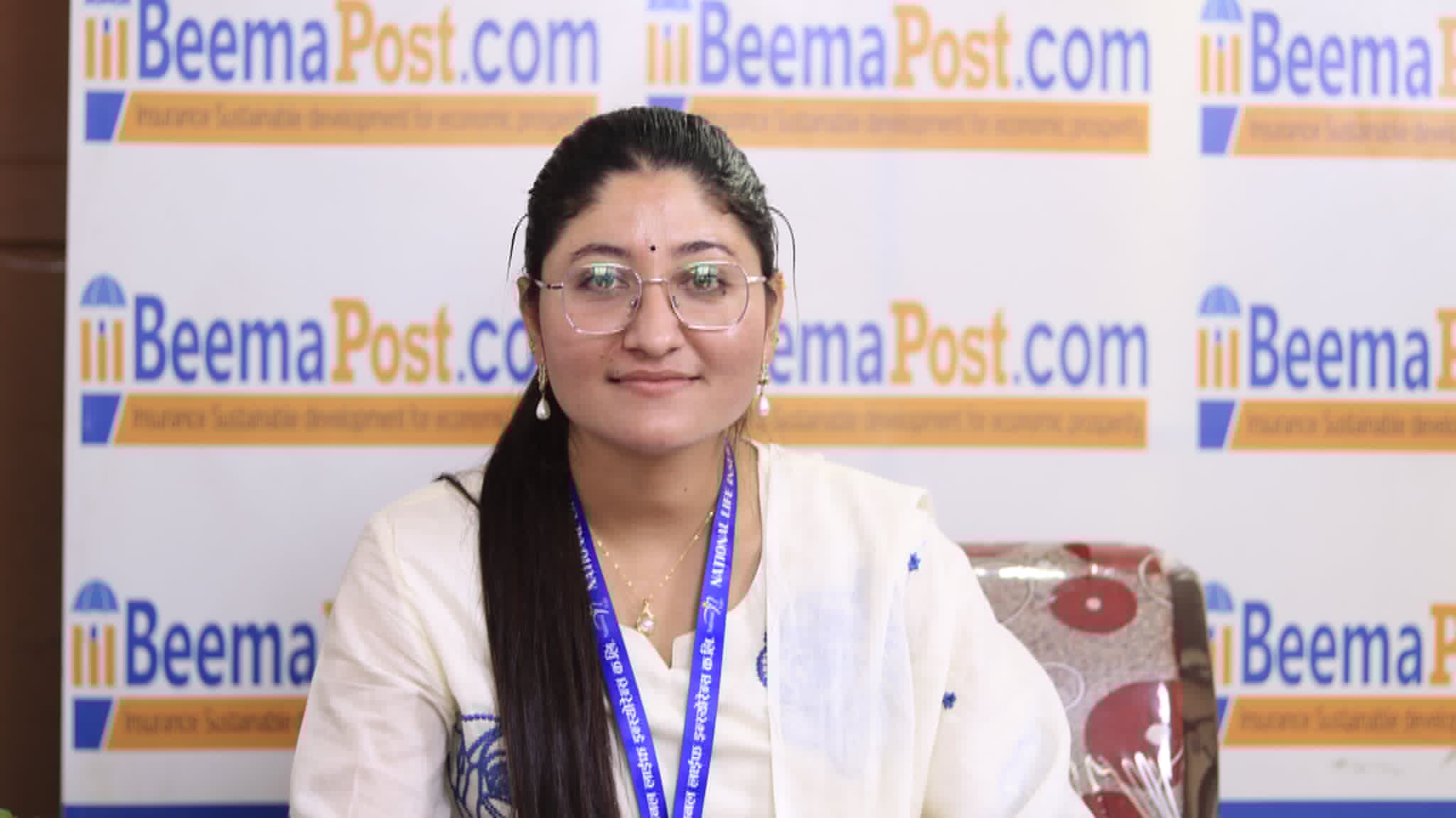
Kathmandu — Manisha Bishwakarma, who previously worked in an NGO, is currently serving as a Senior Business Manager at National Life Insurance. She has been running her insurance business through social media and has been associated with the insurance agent profession since 2024.
By creating detailed videos explaining insurance plans and sharing them on social media, she has been helping Nepalis both in Nepal and abroad get insured. Below is an edited summary of her conversation with Beemapost about her entry into the insurance field and her journey.
When did you enter the insurance sector?
I am currently working as a Senior Business Manager at National Life Insurance. I received my agent code in 2017. However, I started working professionally as an insurance agent only from 2024. Before that, I was focused on studying and understanding insurance. At the same time, I was working as a Senior Facilitator in an NGO. While working there, I used to explain insurance to people I knew in rural areas and also did some small-scale insurance business.
One of my clients, after paying premiums for about three years, had an accidental claim. At that time, it was not common to insure for large amounts, and since he was from a rural background, I had insured him for NPR 200,000. He had paid only two installments, totaling around NPR 28,000, before he died in an accident. Since accidental claims provide double benefits, his family received NPR 400,000. After that payment, I received such positive feedback from his family that I was motivated to leave my NGO job and move forward in the insurance profession. From 2019, I started working in insurance alongside my NGO job, and as I continued to achieve success, I eventually pursued it professionally from 2024.
How has technology affected the insurance agent profession?
Recently, I have also been conducting business through social media. When I post videos explaining insurance plans in detail, people show interest and contact me. After they reach out, I calculate everything based on their income, policy term, sum assured, age, bonus rate, and investment capacity, and then recommend a suitable policy. Clients send the required documents online and transfer the premium directly to the company’s account. After the policy is issued, it is delivered via courier either to the insured person or their family.
What kind of feedback have you received from door-to-door policy sales?
Selling policies through home visits is the most effective. It allows me to understand the client’s income, condition, and expenses, and explain everything in front of their family. It also spreads a positive message within the neighborhood.
These days, the agent profession is often viewed as a part-time job. Can it bring meaningful change to one’s life?
I consider the insurance agent profession to be a very meaningful and even noble job. Let me share another example. A woman around 40 years old, whose husband was working abroad, took an insurance policy through me. Since her family had a stable income while her husband was abroad, I suggested she invest in insurance. She agreed, and I arranged a 16-year policy worth NPR 1,000,000. She paid premiums for four years, but when it was time to pay the fifth installment, both of her kidneys failed. After I received the news, I contacted her, reviewed all the documents, and she received NPR 1,000,000 under the critical illness benefit. In fact, I had personally paid her first premium when initiating the policy, and she later reimbursed me.
What kind of people tend to have a positive perception of insurance?
There is no specific group. People choose insurance based on their situation. Insurance should be taken while one is still young, earning, and healthy. There is no record of anyone becoming poor because of insurance. People may have different income levels, but no one knows what the future holds. Insurance provides strong financial support in case of unforeseen events. It is something you do not for today, but for the future.
Which policies are most popular among clients?
At present, the policy I sell the most is the 10-year plan, especially the Amrit Barsha insurance plan. In this plan, the client pays premiums for four years, and the remaining six years are covered by money-back returns from the company. This policy is particularly popular among people living abroad. Since they usually stay abroad for at least five years, they have sufficient income during that period and can easily pay the premiums. After they return to Nepal, the cashback from the company helps cover the remaining payments.
There are platforms like MDRT, COT, and TOT. Which level are you at currently?
When I first received my agent code, I did not have much knowledge about insurance. But as I gradually learned more and became committed to this field, I achieved MDRT status in 2025. It requires a lot of struggle and hard work. I have achieved MDRT twice and am working toward higher levels. Regardless of the platform, it is important to move forward with a positive mindset. With positivity, consistency, hard work, and patience, success can be achieved in any field.
How much do you earn annually as a professional agent?
There is no fixed amount. It depends on the effort you put in. One can earn anywhere from a minimum of NPR 100,000 per year to millions.
How important is professionalism in this field?
It is extremely important. Not only in insurance but in every profession, personality and professionalism are always evaluated. To new agents, I would say do not focus only on earning. Work with a positive mindset, determination, patience, and dedication. Success will definitely follow.
Is there greater attraction toward child insurance?
Yes, child insurance is quite popular because it provides free risk coverage for the proposer. From an investment perspective as well, a 16-year child insurance plan at National Life can provide returns up to double the sum assured.
Which age group shows the most interest in insurance?
Possibly due to the influence of social media, I have sold most policies to people between the ages of 18 and 55. Among them, individuals aged 40 to 50 are the most active.
Do you think the company should introduce any new plans that are currently in demand?
Not really. National Life already offers suitable plans for all types of clients, from low-income groups to high-income individuals. Plans like Amrit Barsha and others that offer benefits after a few years are already available. If clients manage to pay premiums with some effort in the initial years, the cashback provided later by the company makes it much easier to continue.
How is the relationship between company staff and agents?
Personally, I have a very positive view of the company. It is an established and reputable organization, and its bonus rates are also excellent. However, I do not believe it is right to say only my company is the best, as all companies offer fairly similar services.
Do you think the company should move toward full digitalization?
In today’s world, no one is far from the internet. People can access everything happening around the world from their homes. From that perspective, companies should definitely move toward full digitalization. If insurance policies can be bought and sold through apps or social media, it would save time and make the process much more convenient.