
G7 Warns of Rising Global Economic Risks, Calls for Coordinated Action on Trade and Financial Imbalances
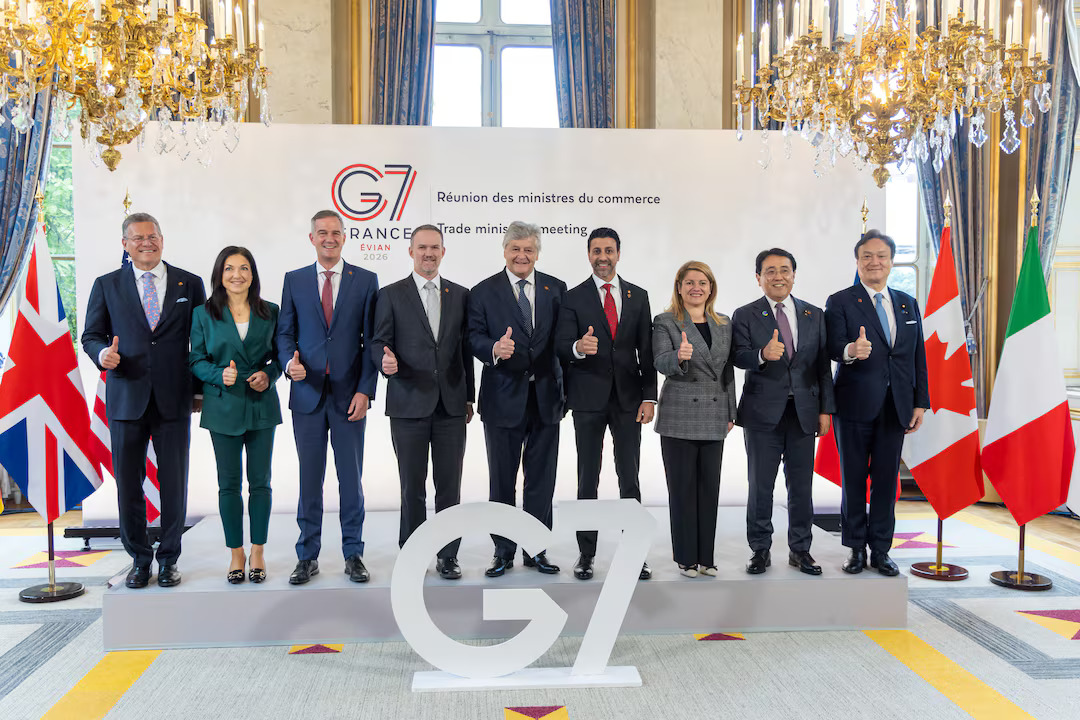
Photo Courtesy: Reuters
PARIS — Finance ministers and central bank governors from the Group of Seven (G7) nations have expressed growing concern over rising global economic uncertainty, widening financial imbalances, and escalating geopolitical tensions, warning that failure to coordinate policy responses could threaten global growth and financial stability.
In a joint communiqué issued following their May 19 meeting in Paris, G7 leaders reaffirmed their commitment to multilateral cooperation and coordinated economic policies amid mounting global challenges. The meeting also included consultations with representatives from Brazil, India, Kenya, and South Korea, alongside senior officials from major international institutions including the International Monetary Fund (IMF), World Bank, OECD, Financial Stability Board, Asian Development Bank, African Development Bank, and the International Energy Agency.
The G7 acknowledged that the ongoing conflict in the Middle East has intensified risks to global growth and inflation, particularly by disrupting energy, food, and fertilizer supply chains. The group stressed that vulnerable economies are being disproportionately affected by the resulting price pressures and market instability.
The communiqué emphasized the urgent need for the restoration of secure maritime transit through the Strait of Hormuz and called for a lasting resolution to the conflict. The G7 said it would continue monitoring the impact of the crisis on global growth and financial markets in coordination with international organizations.
The group also reaffirmed support for stable and transparent commodity and energy markets and urged countries to avoid arbitrary export restrictions that could further disrupt global trade flows. Finance leaders said recent developments have reinforced the importance of diversifying supply chains to strengthen long-term economic resilience.
The IMF, World Bank, and International Energy Agency were tasked with strengthening coordination and developing shared assessments of the global economic impact of the Middle East conflict, while working with the Financial Stability Board to safeguard financial stability. The G7 also welcomed a joint commitment by seven multilateral development banks to coordinate support for countries affected by the crisis.
Central banks participating in the meeting reiterated their commitment to maintaining price stability and preserving the resilience of the global financial system. The communiqué stated that monetary policy decisions would remain data-driven, with close monitoring of the impact of commodity price shocks on inflation expectations and economic activity.
A major focus of the discussions was the growing concern over widening global economic imbalances. The G7 noted that persistent current account deficits and surpluses have increased in recent years and could pose serious risks to balanced global growth and financial stability if left unaddressed.
The group said such imbalances are largely driven by underlying savings and investment dynamics, but may also result from non-market policies, sectoral distortions, and fiscal strategies. According to the communiqué, prolonged imbalances risk intensifying trade tensions and could eventually trigger disorderly market adjustments through financial channels.
To address the issue, the G7 urged countries with large external deficits to pursue policies that support domestic savings and fiscal consolidation. Meanwhile, countries with persistent surpluses were encouraged to strengthen domestic demand through higher investment, productivity reforms, improved social safety nets, and measures aimed at reducing market distortions.
The communiqué also called for stronger monitoring of external imbalances through the IMF’s bilateral and multilateral surveillance frameworks, with greater emphasis on forward-looking risk scenarios and the broader impact on emerging and developing economies.