
Budget Expands Insurance Coverage Across Health, Agriculture, Housing and Disaster Risk Management
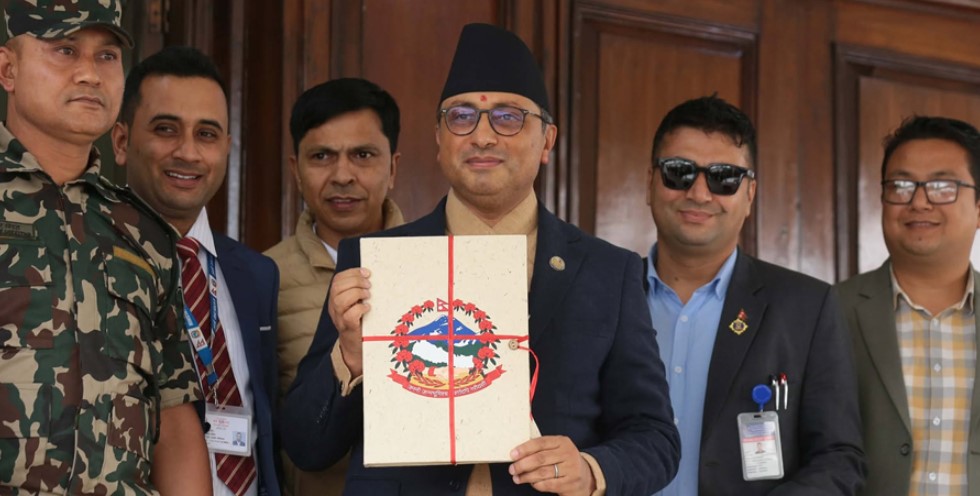
Kathmandu — The government has unveiled an ambitious expansion plan for Nepal’s insurance sector through the national budget for fiscal year 2026/27, with major policy measures targeting health, agriculture, transport, housing, labor protection and disaster risk management.
Presenting the budget in Parliament, Finance Minister Swarnim Wagle announced a series of reforms aimed at broadening insurance coverage and strengthening financial protection mechanisms across the country.
Health Insurance Expansion
The government has set a target of bringing 90 percent of the population under health insurance coverage within the next three years. To streamline existing healthcare support schemes operated by different agencies, the budget proposes introducing a unified “single payment system.”
In an effort to reduce out-of-pocket medical expenses for citizens, the government has allocated Rs 15 billion for the health insurance program.
Higher Subsidies for Agricultural Insurance
To support genuine farmers and livestock producers, the government has announced an insurance premium subsidy of up to 80 percent for agricultural and livestock insurance policies.
According to the Finance Minister, the measure is intended to protect farmers from financial risks while reducing misuse of agricultural subsidies. The government has earmarked Rs 2.19 billion for the program.
Motor Insurance and Mandatory Risk Coverage
The budget also includes significant reforms in the motor insurance sector. The compensation limit for third-party motor insurance will be increased to Rs 1 million.
In addition, the government plans to require vehicles to install accident-monitoring devices as part of broader road safety measures. Policies related to accident insurance and critical illness coverage will also gradually be made mandatory.
Mandatory Insurance for Urban Housing
Insurance coverage for residential buildings in urban areas is set to become compulsory under the new budget framework. The government plans to require proof of insurance before approving building construction maps and permits.
To encourage homeowners to purchase insurance, the government has announced an income tax exemption of up to Rs 10,000 on premiums paid for residential property insurance.
Labor Protection and Workplace Insurance
The budget introduces stricter labor protection measures by requiring both workers and employers to be registered in the national labor registry system.
Licensed institutions employing workers will now be required to meet standards related to insurance, housing and workplace safety. The government has also pledged to improve compensation and insurance claim settlement mechanisms for workplace accidents.
Strengthening Nepal Reinsurance Company
The budget seeks to strengthen the role of Nepal Reinsurance Company by mandating that Nepali insurers cede at least 20 percent of their insured portfolio to the state-backed reinsurer.
The government also plans to require a fixed portion of risks to be reinsured with foreign reinsurance companies for risk diversification purposes.
In addition, reinsurance arrangements for protection schemes operated by large public institutions such as the Employees Provident Fund, Citizen Investment Trust and Social Security Fund will also be routed through Nepal Reinsurance Company.
IPO Plan for State-Owned Life Insurer
The government has further announced plans to issue shares of the state-owned Rastriya Beema Company to the general public.
Disaster and Transport Insurance
The budget also prioritizes insurance as a key mechanism for managing losses caused by natural disasters such as floods, landslides and earthquakes.
Additionally, the government plans to make transport insurance mandatory to improve safety and risk management in the logistics and transportation sector.
Industry Reaction
Responding to the budget announcement, former president of the Nepal Insurance Agents Association, Kedar Adhikari, welcomed the reforms.
He said the increase in third-party motor insurance coverage to Rs 1 million would significantly benefit middle- and lower-income groups affected by accidents.
Adhikari also praised the tax exemption on residential insurance premiums, saying it would encourage more people to insure their homes rather than purchasing insurance only when required by banks during loan processing.