
World Bank: Iran War Pushing Energy and Food Costs Higher, Inflation Risks Mount
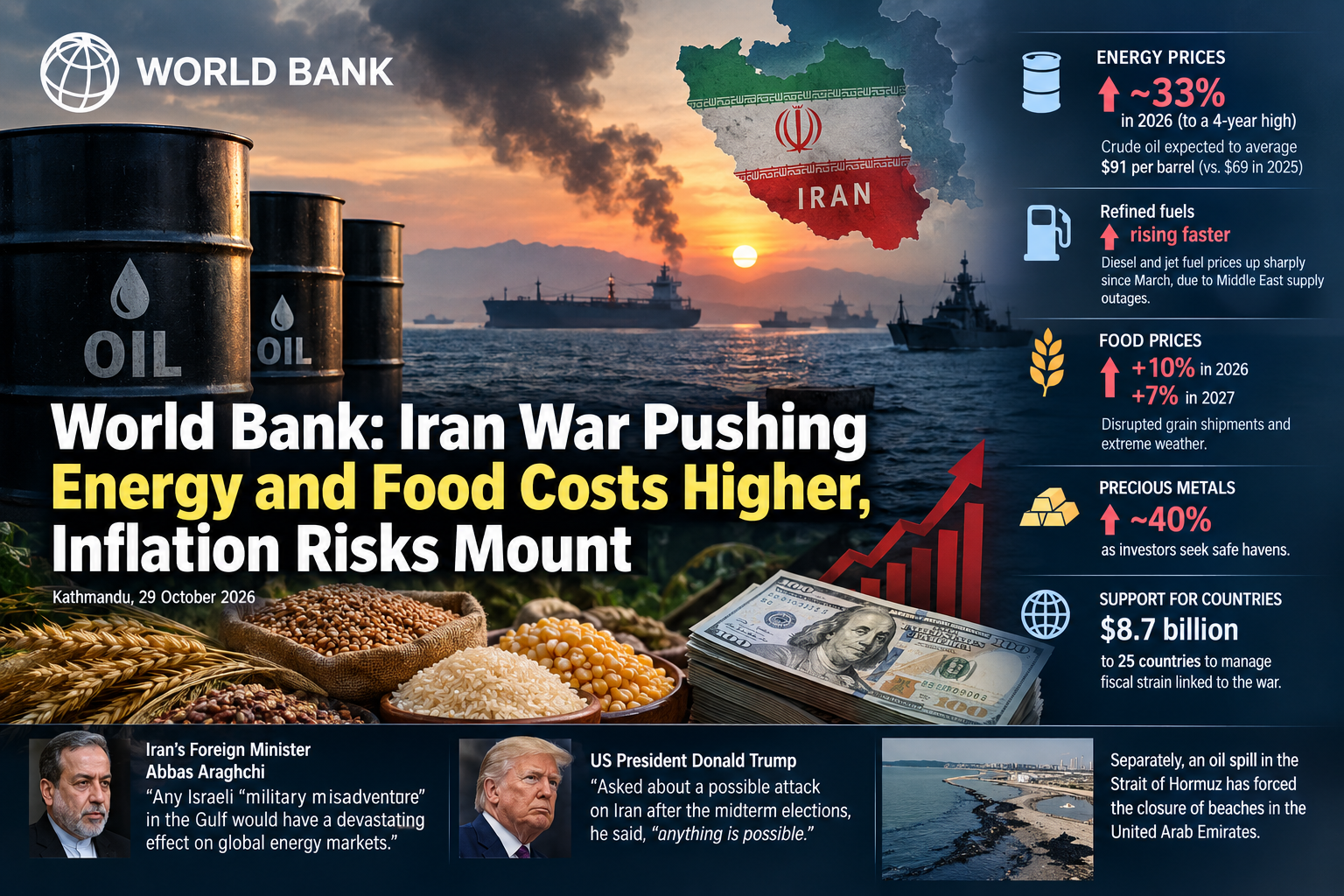
Kathmandu — The conflict involving Iran is set to make energy and food markedly more expensive this year, according to a new World Bank assessment that warns the squeeze could deepen if disruptions continue.
In its latest Commodity Markets Outlook, the bank projects energy prices will climb by about a third in 2026, reaching their highest level in four years. It expects crude oil to average around $91 a barrel, compared with $69 in 2025, as the war erodes oil inventories and interferes with shipping routes.
Refined fuels have been hit harder than crude itself. Diesel and jet fuel prices have risen considerably faster since March, which the report attributes largely to supply outages across the Middle East.
Food is also under pressure. The bank forecasts food commodity prices will rise roughly 10 percent this year and a further 7 percent in 2027, citing disrupted grain shipments and extreme weather. Precious metals are expected to surge by about 40 percent as investors seek safe havens.
The bank cautioned that energy and food costs could still spike further, pushing global inflation higher. To help cushion the fallout, 25 countries have so far received a combined $8.7 billion in support to manage fiscal strain linked to the war.
The warning arrives amid rising diplomatic tension. Iran’s Foreign Minister Abbas Araghchi said any Israeli “military misadventure” in the Gulf would have a devastating effect on global energy markets. Meanwhile, US President Donald Trump, asked by reporters about a possible attack on Iran after the American midterm elections, responded that “anything is possible.”
Separately, an oil spill in the Strait of Hormuz has forced the closure of beaches in the United Arab Emirates.