
Finance Minister Wagle Reverses Silwal-Era Policy, Makes 20% Reinsurance Through Nepal Re Mandatory
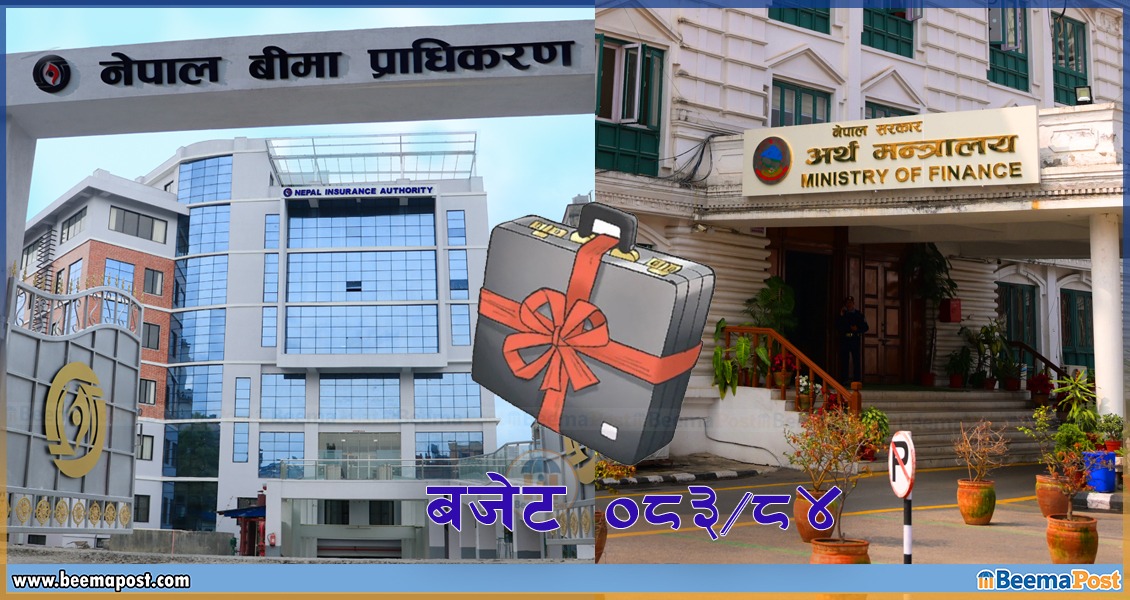
Kathmandu — This year’s national budget has introduced a broader and more interventionist approach to Nepal’s insurance sector, moving beyond the traditional focus on health insurance and placing greater emphasis on strengthening non-life insurance and domestic reinsurance capacity.
While previous budgets largely centered around expanding health insurance coverage, the budget for fiscal year 2026/27 includes policy measures related to motor insurance, housing insurance, disaster risk management and compulsory reinsurance arrangements.
At the center of the debate is the government’s decision to make it mandatory for insurance companies to place at least 20 percent of their reinsurance business with the state-backed Nepal Reinsurance Company.
The move effectively overturns a controversial policy change introduced during the tenure of former Insurance Board chairman Surya Prasad Silwal, who had reduced the guaranteed share previously allocated to Nepal Reinsurance Company.
Budget Focus Shifts Toward Non-Life Insurance
Insurance sector stakeholders say this year’s budget appears more focused on reforms in the non-life insurance sector than on life insurance.
Ahead of the budget announcement, industry representatives had submitted several recommendations to the government, including expanding tax incentives for insurance, mandatory insurance coverage for government-owned infrastructure and a more balanced approach toward domestic reinsurance obligations considering the risk-bearing capacity of local reinsurers.
However, many observers believe the government ultimately prioritized ensuring business volume for Nepal Reinsurance Company.
Among the major policy changes, the government announced an increase in third-party motor insurance coverage limits and proposed mandatory installation of accident-monitoring devices in vehicles. The budget also envisions gradually making accident and critical illness insurance mandatory.
Insurance professionals have generally welcomed these measures, noting that several recommendations submitted by the Nepal Insurance Authority were incorporated into the budget.
The government has also introduced tax relief measures for residential property insurance to encourage wider adoption of housing coverage.
Regulators Welcome the Budget
Executive Director of the Nepal Insurance Authority, Sushil Dev Subedi, said the budget had incorporated many of the regulator’s recommendations.
According to him, the government has attempted to protect the state-backed reinsurer while also bringing several public institutions that remain outside the insurance framework under reinsurance coverage.
“From the regulator’s perspective, we see the overall budget in a positive light,” he said.
Life Insurers Seek Greater Tax Reforms
Chairman of the Life Insurance Association Nepal, Prabin Raman Parajuli, said the budget had made a positive attempt to address the insurance sector but appeared to give comparatively less priority to life insurance.
He noted that the industry had expected broader reforms, including expanded tax exemptions for insurance, revisions to taxation on policyholder bonuses after maturity and relief from what insurers describe as double taxation.
“Those expectations were not addressed as anticipated through the budget,” he said.
Non-Life Insurers Raise Concerns Over Mandatory Reinsurance
Chairman of the Nepal Insurers’ Association, Birendra Baidwar Chhetri, said the budget had attempted to address the concerns of non-life insurers but added that not all industry suggestions had been incorporated.
He welcomed measures such as higher third-party insurance limits, tax exemptions for residential building insurance, continuation of agricultural insurance subsidies and new safety standards related to insurance and housing.
However, Chhetri expressed concern that the government focused primarily on guaranteeing business for Nepal Reinsurance Company without sufficiently assessing the company’s risk-bearing capacity.
He also questioned the plan to channel reinsurance for public protection schemes (including those linked to the health insurance system and other state-run programs) through Nepal Reinsurance Company without adequate technical assessment by the insurance regulator.
According to him, the industry had proposed mandatory insurance coverage for government-owned infrastructure to encourage broader public understanding of insurance, but the proposal was not included in the budget.
Chhetri further warned that forcing insurers to retain more risks domestically could weaken companies if not implemented carefully, particularly given past difficulties in settling large claims arising from COVID-19 insurance, floods, landslides and the Gen-Z protests.
Insurance Agents Welcome Consumer-Focused Measures
Former president of the Nepal Insurance Agents Association, Kedar Adhikari, strongly welcomed the budget.
He said increasing compulsory third-party motor insurance coverage to Rs 1 million would significantly improve compensation support for middle- and lower-income victims of road accidents.
“Even if the premium rises from around Rs 3,000 to Rs 7,000, the level of protection and benefits available to policyholders will also increase substantially,” he said.
Adhikari also praised the government’s decision to provide income tax exemptions of up to Rs 10,000 on residential property insurance premiums, saying it would encourage more people to voluntarily insure their homes rather than purchasing insurance only when required by banks for loans.