
BLA’s Evolution Raises Questions Over Its Role in Balochistan Conflict
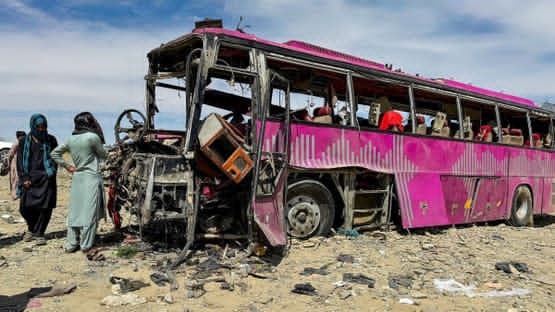
The deadly attacks carried out across Balochistan on January 31, which left dozens of civilians and security personnel dead, have renewed attention on the changing nature of the Baloch Liberation Army (BLA), a group whose tactics and operations have undergone a significant transformation over the past two decades.
The BLA emerged from a separatist insurgency rooted in longstanding political and economic grievances in Balochistan. However, its activities have increasingly shifted away from traditional insurgent operations toward large-scale attacks targeting civilians, public infrastructure and strategic economic assets.
While demands for greater political inclusion, improved governance and a fairer distribution of resources continue to shape public debate in Balochistan, public concerns are largely focused on unemployment, insecurity, corruption and access to basic services. Political engagement through constitutional and democratic channels remains the dominant approach among mainstream Baloch parties and leaders.
Balochistan Chief Minister Sarfraz Bugti reiterated that position in August 2025, stating that the government remained open to dialogue with those willing to pursue political solutions while calling for a united stand against terrorism.
The group’s operational methods have changed markedly since the late 1990s and early 2000s, when attacks were primarily directed at security forces and government installations. In recent years, the BLA has carried out suicide bombings, coordinated assaults, train hijackings and attacks on public spaces, expanding both the scale and impact of its operations.
The 2025 hijacking of the Jaffar Express and the group’s coordinated HEROF operations marked some of the most high-profile incidents in this shift. Civilians have increasingly found themselves in the line of fire, with attacks affecting public transport, educational institutions and other civilian locations.
The rise of specialized units such as the Majeed Brigade and Fateh Squad has enabled the organization to conduct complex attacks across multiple locations simultaneously, increasing its operational reach and effectiveness.
Alongside these tactical changes, the BLA’s structure and sources of funding have evolved. The group has been linked to activities including extortion, kidnapping for ransom, smuggling and trafficking, providing financial resources beyond traditional insurgent networks. It has also demonstrated a willingness to cooperate with other militant groups despite ideological differences, forming alliances based on operational objectives rather than shared political goals.
The group’s focus has increasingly expanded to include economic and strategic targets. Chinese nationals, transportation routes, port facilities and projects connected to the China-Pakistan Economic Corridor (CPEC) have repeatedly come under attack, highlighting an emphasis on disrupting investment, infrastructure and regional connectivity.
Regional developments have further complicated the conflict. Cross-border movement, the flow of weapons following developments in Afghanistan after 2021 and allegations of foreign support have added new dimensions to the security landscape in Balochistan.
The debate surrounding the BLA extends beyond questions of security. The way the organization is described carries broader implications for public understanding of the conflict and the responses adopted to address it. At the same time, the underlying political and economic challenges facing Balochistan remain unresolved, requiring continued attention through governance reforms, development initiatives and greater political inclusion.
As violence persists, the conflict continues to reflect two parallel realities: the enduring grievances present in Balochistan and the increasingly violent campaign being waged by the BLA. How those realities are addressed is likely to shape the province’s future for years to come.