
CAN Federation Calls for Stronger Public-Private Collaboration to Realise FY 2026/27 Digital Ambitions
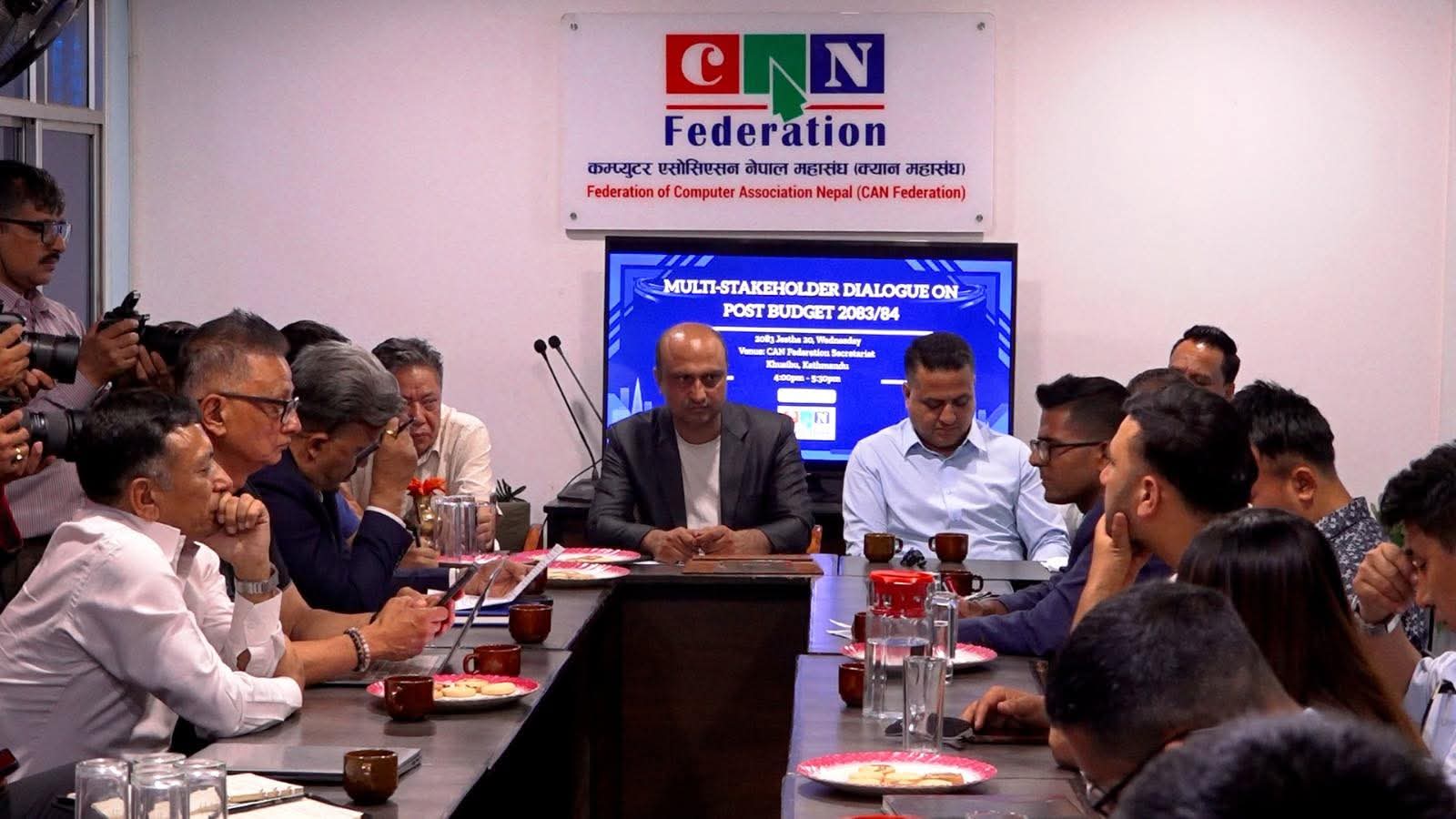
Kathmandu — Representatives from Nepal’s technology sector have called for stronger policy execution, targeted incentives, and closer collaboration between the government and private sector to maximize the opportunities presented by the national budget for Fiscal Year 2026/27.
These recommendations emerged during a high-level discussion organized by the Federation of Computer Association Nepal (CAN Federation) at its Secretariat in Khusibu. The event brought together business leaders, startup founders, technology experts, policy specialists, and industry stakeholders to evaluate the budget’s implications for Nepal’s rapidly evolving digital ecosystem.
Participants welcomed the government’s growing focus on emerging technologies, particularly the inclusion of a national vision for “Sovereign AI,” describing it as an encouraging signal of Nepal’s intent to strengthen its technological capabilities. However, speakers cautioned that policy ambitions alone will not be sufficient unless they are supported by practical implementation mechanisms, investment-friendly regulations, and sustained engagement with industry.
A recurring theme throughout the discussion was the need for a structured framework that enables meaningful public-private collaboration. Stakeholders argued that major initiatives involving artificial intelligence, data centers, cloud infrastructure, and digital services cannot succeed without harnessing private-sector expertise, capital, and innovation.
Industry representatives also expressed concern over the recently introduced 5 percent Value Added Tax (VAT) on electricity, warning that the measure could place additional financial pressure on technology businesses that depend heavily on uninterrupted power. They noted that data centers and AI-driven operations require significant energy consumption, making electricity costs a critical factor in competitiveness and long-term sustainability.

Another priority identified during the dialogue was the need for dedicated incentives to accelerate AI infrastructure development. Participants recommended measures such as tax relief, subsidies, and financing support for the acquisition of Graphics Processing Units (GPUs), which are essential for advanced computing, machine learning, and AI research. Such support, they said, would be instrumental in turning the government’s Sovereign AI aspirations into reality.
Beyond infrastructure, the discussion highlighted the importance of strengthening Nepal’s digital talent pool. Speakers emphasized that the country must move beyond introductory AI awareness programs and invest in specialized training, re-skilling, and workforce development initiatives that equip researchers, engineers, and software professionals with industry-relevant expertise.
Speaking at the event, CAN Federation Acting President Chiranjibi Adhikari underscored the importance of building trust between policymakers and the private sector. “The government should view the private sector as a partner in delivery rather than attempting to develop and manage technology solutions on its own,” Adhikari said. “By leveraging the experience and capabilities of domestic technology companies, public institutions can accelerate innovation while ensuring more efficient implementation.”
The interaction concluded with a consensus that Nepal has an opportunity to strengthen its position in the digital economy, provided that budget commitments are translated into actionable policies, supported by investment-friendly measures, and implemented through effective collaboration between the public and private sectors.