
SpaceX IPO Pushes Elon Musk’s Net Worth Above $1 Trillion, Making Him the First Trillionaire in History
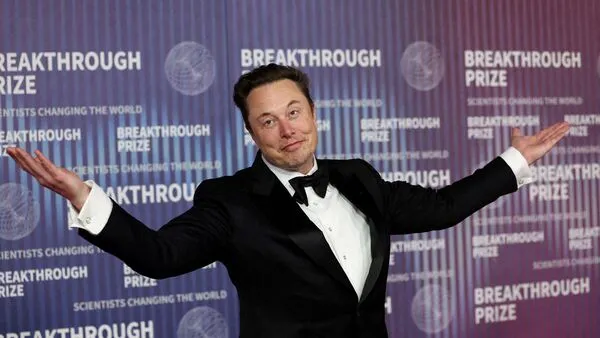
Elon Musk has reached a financial milestone that highlights the scale of his business empire and the growing influence of founder-led mega corporations. Following SpaceX’s debut on public markets and a surge in valuation, Musk is now widely described in investor estimates as the world’s first trillionaire on paper. The label reflects equity value rather than cash holdings or spendable wealth.
The shift is largely driven by the initial public offering (IPO) of SpaceX, which reportedly raised about $75 billion and placed the company among the most valuable private-origin firms in history. Musk’s controlling stake in the company, combined with his holdings across other ventures, has pushed his estimated net worth beyond the trillion-dollar mark based on market pricing. However, most of this wealth remains tied to shares that cannot be easily sold or converted into cash in the short term.
A significant portion of Musk’s fortune is concentrated in SpaceX, alongside his long-standing role at Tesla. Together, these assets place him far ahead of other global billionaires in estimated net worth, including tech founders such as Larry Page and Larry Ellison, though these comparisons remain highly sensitive to market movements.
Despite the headline figure, the trillionaire label is not fixed. It depends heavily on continued high valuations for SpaceX once trading stabilizes. If the company’s share price falls below key thresholds, Musk’s estimated net worth would drop accordingly, reinforcing that the figure is a market-based snapshot rather than a permanent status.
SpaceX’s ownership structure further amplifies Musk’s position. He retains dominant control through enhanced voting rights, giving him effective authority over most company decisions. Company leadership has defended this structure as necessary to preserve long-term strategic direction, particularly for a business operating in capital-intensive and technologically uncertain sectors such as space transportation and satellite infrastructure.
That long-term focus is central to SpaceX’s strategy. The company invests heavily in reusable rockets, orbital launch systems, and satellite networks, many of which may take years or decades to fully mature commercially. While investor enthusiasm has supported its valuation, analysts note that much of the company’s worth is still based on future potential rather than current earnings.
Musk’s broader business ecosystem, sometimes described by analysts as the “Muskonomy,” extends across multiple industries. It includes ventures such as Neuralink and The Boring Company, each reflecting his focus on long-term engineering challenges. Together, these companies reinforce his role as a central figure across several emerging technology sectors.
Financial markets have also developed what some analysts call an “Elon premium,” where investor confidence in Musk’s execution ability contributes to higher valuations than traditional financial metrics might justify. This effect has been particularly visible in SpaceX’s IPO pricing, where expectations of future innovation weigh heavily in valuation models.
Musk’s rise has been shaped by a career that spans electric vehicles, aerospace, and digital platforms. After establishing himself through Tesla, he played a major role in accelerating the global shift toward electric transportation. Traditional automakers, once skeptical of large-scale EV production, have since expanded their own electric vehicle programs in response.
He later expanded into social media through the acquisition of the platform now known as X (social media platform), which gave him direct access to a global audience and increased his influence in public debates on free speech, regulation, and politics.
His political engagement has also drawn attention. Interactions and occasional disagreements with figures such as U.S. President Donald Trump have highlighted how closely his business activities intersect with political discourse. At various points, his involvement in policy discussions and advisory roles has sparked both support and criticism, reflecting concerns about the concentration of private influence.
Critics argue that Musk’s level of control across multiple companies raises governance concerns, particularly given his ability to influence markets, public opinion, and technology development simultaneously. Supporters argue that his track record of building and scaling high-risk technologies justifies strong founder control and long-term strategic consistency.
Wall Street remains divided on how to value such a concentrated empire. Some investors caution that SpaceX’s valuation depends heavily on future breakthroughs in space infrastructure and commercialization. Others argue that Musk’s leadership warrants a structural premium that traditional valuation methods cannot easily capture.
As Musk’s wealth crosses symbolic thresholds, it also revives broader debates about inequality and the role of ultra-wealthy individuals in modern economies. His rise comes at a time of heightened scrutiny of extreme wealth, yet his influence among investors and parts of the public remains unusually strong compared to other billionaires.
For now, the trillionaire label reflects a combination of market optimism, concentrated ownership, and long-term belief in Musk’s technological vision. Whether it holds will depend on how SpaceX performs as a public company and whether investors continue to assign a premium to Musk’s leadership.