
Government Plans Legal Amendments to Make Health Insurance Mandatory for All Nepali Citizens
Kathmandu — The government is preparing legal and policy reforms to make health insurance mandatory for all Nepali citizens. The initiative aims to make the health insurance system more organized and sustainable, ensuring that people are not deprived of medical treatment because of financial hardship or concerns over treatment costs when they fall ill.
Minister for Law, Justice and Parliamentary Affairs Sobita Gautam said the government was preparing to amend the health insurance law to guarantee access to healthcare for every citizen.
According to Minister Gautam, a family of up to five members currently pays an annual contribution of Rs 3,500 to receive health treatment benefits worth up to Rs 100,000. Data from the Health Insurance Board show that more than 16.8 million people have enrolled in the program so far. However, insurance coverage remains active for only more than 6.2 million of them. A total of 502 health institutions across the country are affiliated with the program.
Although public participation in the health insurance program has been increasing, Minister Gautam noted a significant gap between the amount collected through contributions and the amount spent on treatment. She also identified unnecessary medical tests, fraudulent insurance claims, attempts to obtain duplicate benefits and misuse of the insurance system as challenges that need to be addressed.
Under the proposed reforms, government employees, private-sector employees and workers, self-employed individuals, people working in the informal sector and the unemployed would all be required to enroll in health insurance up to a specified coverage limit. Contributions would be determined according to individuals’ income and financial circumstances, while the state would assume responsibility for those unable to pay.
The government also plans to integrate and streamline healthcare program currently operated by the Health Insurance Board, the Social Security Fund and other agencies. Its priorities include expanding the network of healthcare institutions affiliated with the program and introducing online systems for insurance enrolment and renewal, maintaining patients’ medical records, referrals to other hospitals, and ensuring transparency in insurance claims and payments.
The proposed reforms also seek to establish effective legal provisions and monitoring mechanisms to prevent unnecessary medical tests and fraudulent claims. Minister Gautam said health institutions operating under local, provincial and federal governments would be linked to the health insurance system, with the responsibilities and financial obligations of all three levels of government clearly defined.
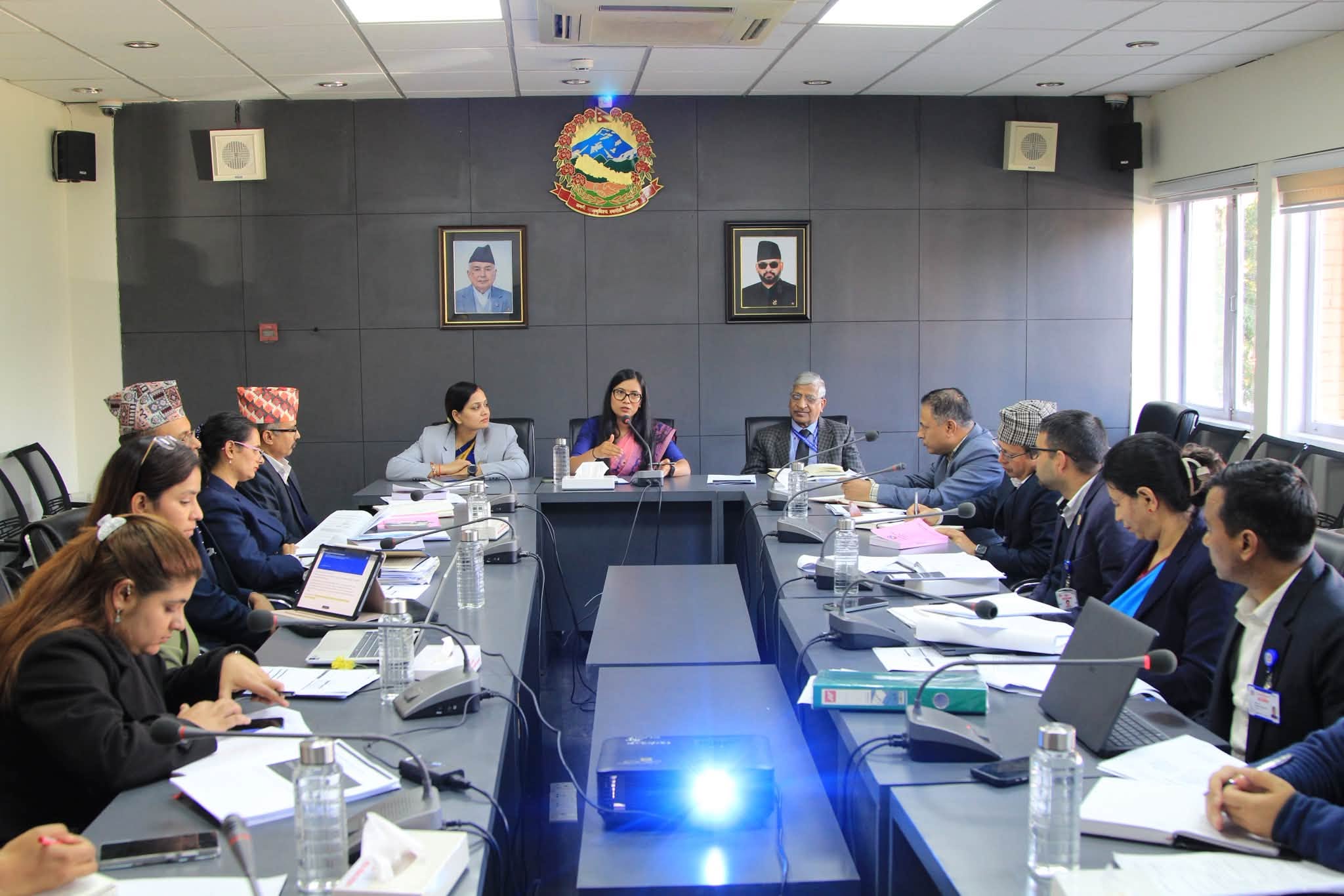
According to Minister Gautam, discussions on the proposed reforms were held at the Ministry of Law, Justice and Parliamentary Affairs with the Minister for Health and Population, Prime Minister’s Health Adviser Dr JP Agrawal, representatives of the Prime Minister’s Secretariat, the Health Insurance Board, the Social Security Fund and other relevant agencies.
Minister Gautam said the key issue was not simply how many citizens had enrolled in health insurance, but how easily they could access treatment when needed and how sustainable the system would be. She said work on amending the law was moving forward with the aim of requiring financially capable citizens to contribute according to their means, while ensuring that the state takes responsibility for those who cannot afford the contributions.