
Global Safety Margins are Thinning, IMF Says, as Nepal’s Finance Minister Courts Recovery Funding in Bangkok
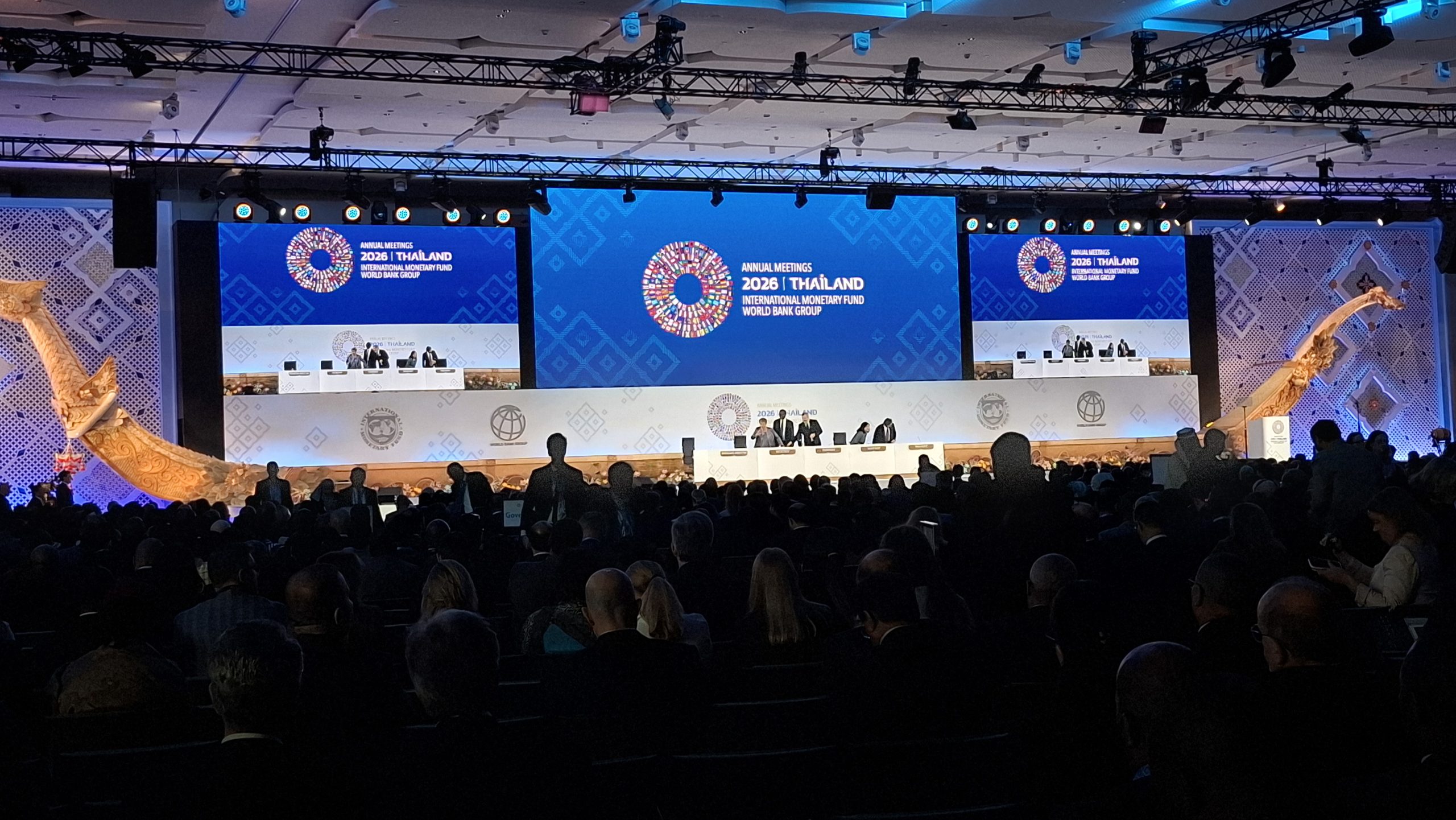
Kathmandu — The world economy is still expanding, but the financial cushions that have protected it from repeated shocks are running low, the International Monetary Fund said at its 2026 Annual Meetings in Bangkok. Nepal’s Finance Minister Swarnim Wagle is among the ministers attending, and he is using the gathering to seek support from development partners.
Addressing the closing plenary on Friday, IMF Managing Director Kristalina Georgieva put global growth for this year at 3.1%, unchanged from the Fund’s forecast a year earlier. Her concern was debt. She said large public borrowing leaves governments poorly placed to withstand the next crisis, and called on them to restore their fiscal reserves through believable plans to shrink deficits over the medium term. In a briefing earlier in the week, she noted that borrowing costs in wealthy economies have climbed to levels not seen in decades, and said these countries now carry much of the blame for failing to build up reserves once the pandemic recovery took hold.
Wagle flew out of Kathmandu on Tuesday. The Finance Ministry says his schedule includes over sixteen meetings with individual countries and multilateral institutions, centered on Nepal’s development financing needs, rebuilding after disasters and economic recovery. He is expected back in Nepal on October 21.
At the same plenary, World Bank Group President Ajay Banga told finance ministers and central bank governors that the global system has to adapt quickly or risk a deepening split between countries in growth and technology. He launched the Bank’s plan for the metals and minerals sector, which sets aside $19 billion for critical minerals projects between fiscal 2026 and 2030. Banga also asked wealthier nations to help pay for digital networks in the Global South, arguing that countries without broadband and cloud access will be left behind by the AI boom. On debt, he urged official bilateral lenders to move faster on restructuring, since thin fiscal reserves are leaving poorer governments unable to fund schooling, health and climate protection.
Georgieva also told delegates that donors pledged over US$100 million during the Bangkok meetings to support the IMF’s technical assistance and training work, about a quarter of what the Fund spends on it each year. She and meetings chair Carlos Carvallo Spalding flagged a growing cyber threat, observing that attackers can now exploit a newly found software flaw within minutes rather than months.
The meetings conclude on Oct. 18.