
From the Archives: FNJ Annual Assembly Labels Supreme Court’s News Takedown Order a Threat to Press Freedom
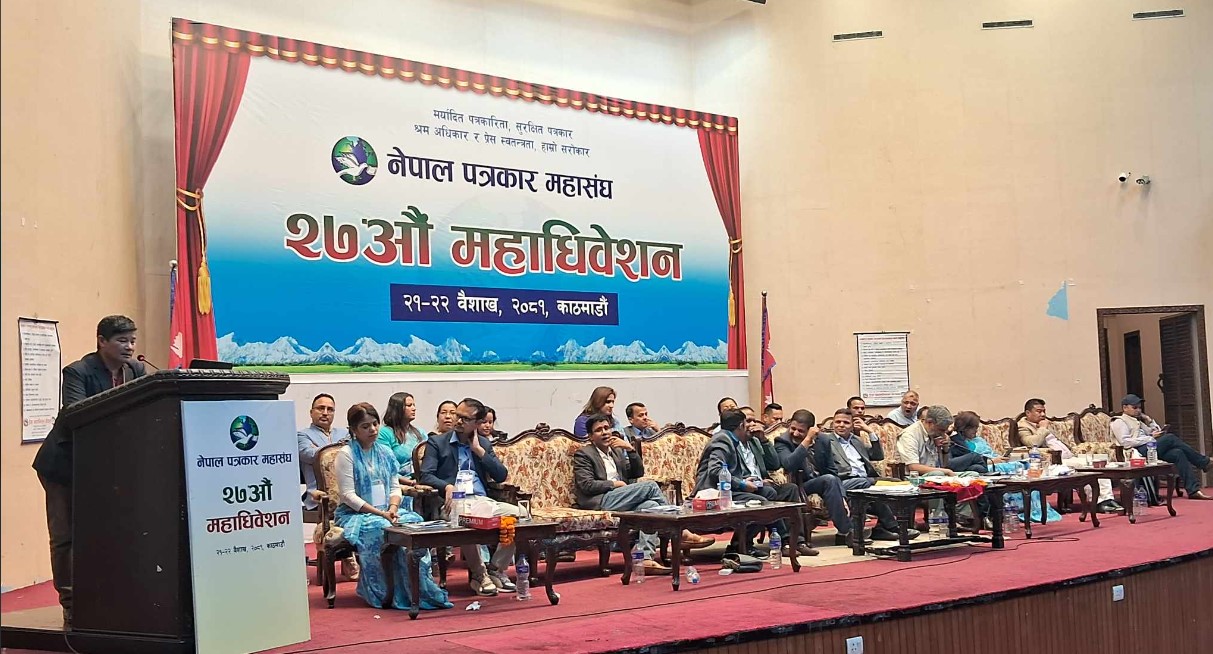
Kathmandu – The central annual assembly of the Federation of Nepali Journalists (FNJ) has concluded that the recent order issued by Nepal’s Supreme Court directing the removal of published news content undermines the constitutional guarantee of full press freedom and has held the country’s highest judicial body responsible for acting against that principle.
Through the adoption of the Kathmandu Declaration, the 27th General Convention of the Federation of Nepali Journalists passed a resolution formally criticizing the Supreme Court and, for the first time, characterized it as an institution acting against press freedom. The declaration, endorsed by central representatives, former presidents, and delegates from across the country, states in its first provision that Nepal’s Supreme Court has acted contrary to the principle of a free press and calls upon all three branches of the state; the executive, legislature, and judiciary; to uphold the constitutional commitment to complete press freedom.
The assembly, held in Kathmandu yesterday, expressed serious concern over the Supreme Court’s recent order requiring the removal of news content and concluded that the move had dealt a significant blow to the constitutional protection of press freedom in Nepal.
Clause 1 of the Kathmandu Declaration states: “This General Convention expresses serious concern over the recent order issued by the Honorable Supreme Court regarding published news content. The decision to compel the removal of published materials, prohibit republication or rebroadcasting, and pursue criminal proceedings over news content is deemed unconstitutional. Therefore, this convention strongly urges all three organs of the state; the executive, legislature, and judiciary; to ensure the full protection of constitutionally guaranteed press freedom.”
The convention also passed a motion of concern directed at the Press Council Nepal. Following extensive debate among delegates over the council’s reported instructions to remove news content in ways viewed as inconsistent with constitutional protections, Clause 7 of the Kathmandu Declaration formally expressed dissatisfaction with the council’s actions and urged it to act in accordance with the Constitution and existing laws.
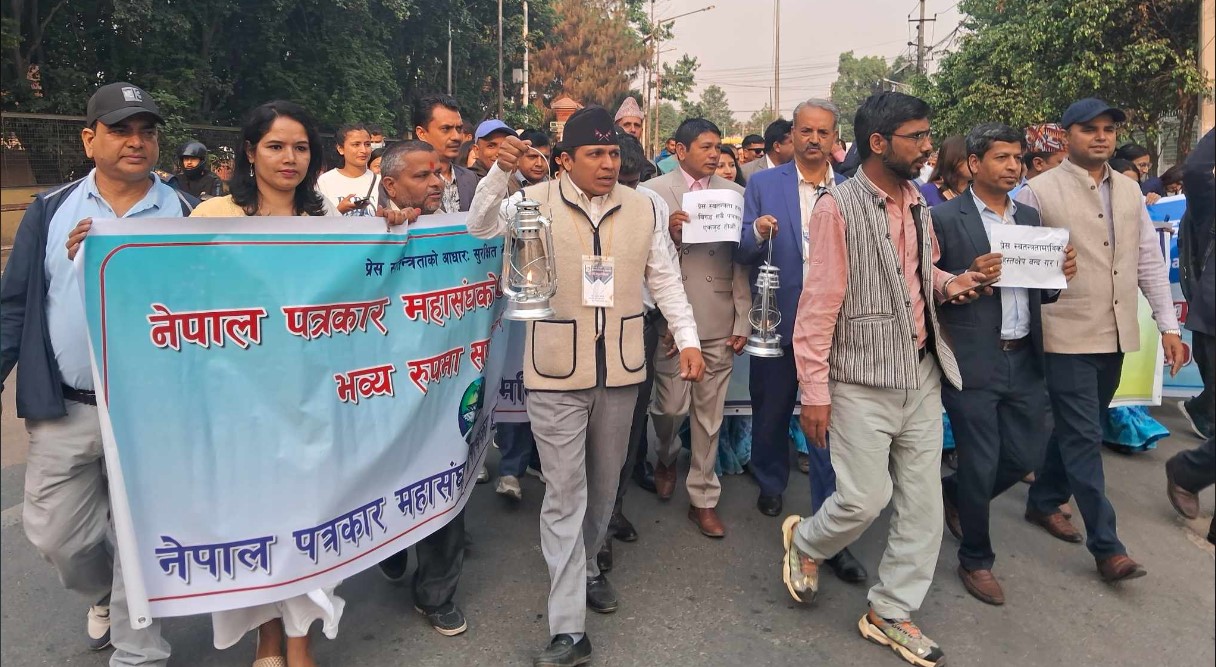
According to the report, independent journalists had earlier organized a lantern protest that pushed the FNJ to openly debate the issue of press freedom and the Supreme Court’s order. Delegates reportedly engaged in extensive discussions during the convention.
The controversy referenced by the convention relates to an audio recording published on May 27, 2024 by the online outlet Sidhakura Dot Com, which claimed that the Constitutional Bench of the Supreme Court had influenced a decision to overturn anti-corruption sting operations conducted by the anti-graft agency through an alleged bribery arrangement worth NPR 1.60 billion. The report also mentioned the names of media executives, a Supreme Court judge, lawyers, and journalists. According to the article, without establishing the factual basis of the claims, a bench led by Justices Nahakul Subedi and Tek Prasad Dhungana ordered the news content removed within 24 hours and directed criminal proceedings against the reporting journalist. Based on that order, the Supreme Court has reportedly already recorded lengthy statements from journalist Nabin Dhungana and the publisher.
The 27th General Convention concluded yesterday after issuing an 18-point Kathmandu Declaration. Among other resolutions, the convention called on journalists to embrace the principle of “Journalism for the Planet” and contribute through reporting to efforts aimed at reducing the impacts of climate change.
The article further argues that by adopting a formal resolution stating that the Supreme Court’s order amounted to an infringement of press freedom, the convention has increased international attention on the issue. Since FNJ is affiliated with organizations including the International Federation of Journalists (IFJ) and other international bodies, the declaration could influence how international institutions engage with developments in Nepal’s media environment. The report suggests that unless the disputed judicial actions are addressed, international attention or missions could follow.
It also argues that such developments could place additional pressure on the Supreme Court and affect its public image internationally.
The 27th General Convention of the Federation of Nepali Journalists was inaugurated by Prime Minister Pushpa Kamal Dahal.
Kathmandu Declaration Issued by the 27th General Convention of the Federation of Nepali Journalists